|
Jun
28
2026
|
|
Posted 103 days ago ago by Admin
|
|
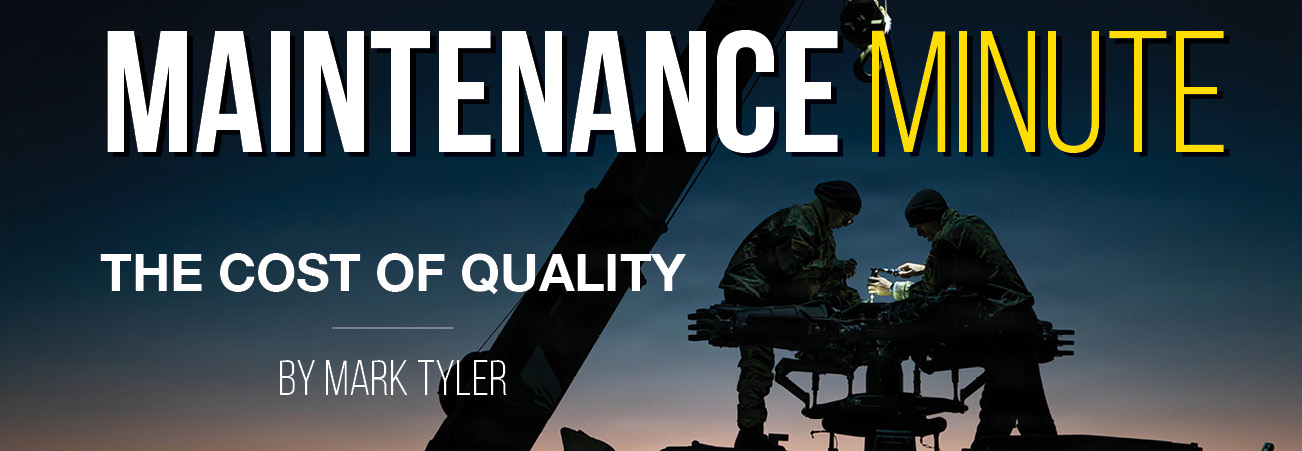
By Mark Tyler
Quality has a cost. In aviation maintenance, quality often goes unnoticed when it is present — but it is always noticed when it is absent. The real question is: what is the return on your investment?
Your investment of time.
Your investment of discipline.
Your investment of focus and professionalism.
Will your customer consider you an asset or a liability?
In the world of aircraft maintenance, everything matters. This profession requires diligent attention, personal responsibility, and a commitment to performing at a consistently elevated level. There is very little room for complacency when lives depend on the work we perform.
Growing up in the Deep South, my parents instilled in me a strong work ethic. They would always say, “If something is worth doing, then it’s worth doing right.” That principle has stayed with me throughout my career, and I still carry that standard today.
Aircraft mechanics receive a gift called opportunity. We have the opportunity every day to create value by the way we perform and communicate. Sometimes, that value is found in the small things — cleaning a windshield, wiping up spilled oil, or taking the extra time to clean an engine deck before returning an aircraft to service. Details matter!
Quality can often be seen before a word is ever spoken. Poor workmanship, careless sealant application, or lack of attention to detail usually points to larger concerns beneath the surface. Excellence leaves fingerprints, but so does mediocrity.
As mechanics, our goal is to miss nothing — mechanically or cosmetically. Yet we are human, and there are times when mistakes happen or performance falls short due to fatigue, pressure, staffing shortages, schedule demands, or AOG situations. The difference is not whether a mistake occurs. The difference is how we respond to it.
Professionals take ownership. Amateurs hide it.
When issues arise, they should be corrected immediately, followed by an honest evaluation of the root cause. Open communication and maintenance debriefs are critical to building a culture of quality and accountability. Quality requires honesty, humility, and commitment.
The consequences of poor quality can be severe: rework labor, aircraft downtime, damaged reputation, low morale, loss of customers, and loss of trust. In the worst-case scenario, inadequate quality can cost lives. This is serious business, and it should always be treated as such.
Quality is easy when conditions are calm. The true test of professionalism is maintaining standards when pressure increases.
The mindset of an A&P mechanic should always be this: Somewhere, someone is trusting me to do the right thing the right way — and you should expect the same from me every single time.
Quality is not accidental. Quality is intentional.
It is built through values, standards, and expectations. Quality becomes part of your reputation, and your reputation will mark you one way or another throughout your career.
Quality costs time.
Quality costs effort.
Quality costs discipline.
Lack of quality always costs more.
Consistent quality is the standard. Live it.
READ MORE ROTOR PRO: https://justhelicopters.com/Magazine
WATCH ROTOR PRO YOUTUBE CHANNEL: https://buff.ly/3Md0T3y
You can also find us on
Instagram - https://www.instagram.com/rotorpro1
Facebook - https://www.facebook.com/rotorpro1
Twitter - https://twitter.com/justhelicopters
LinkedIn - https://www.linkedin.com/company/rotorpro