Analysis
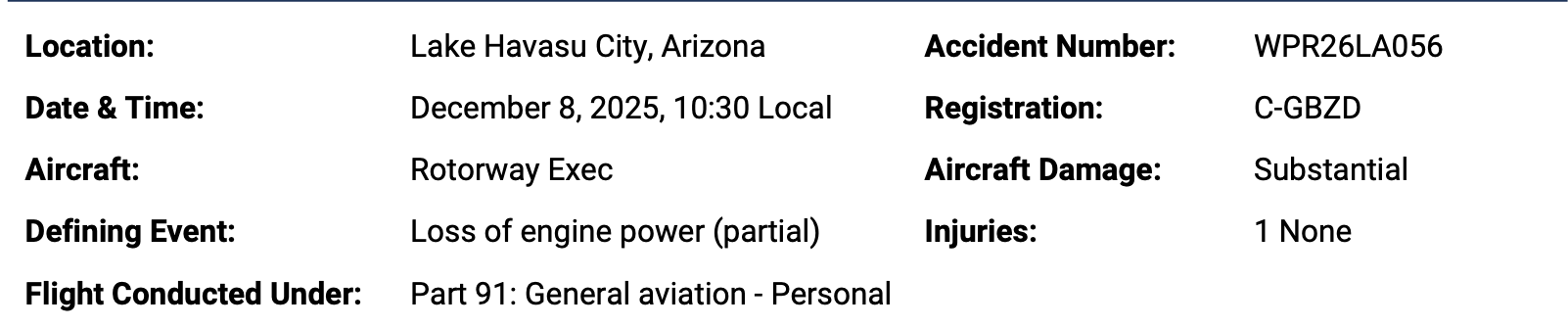
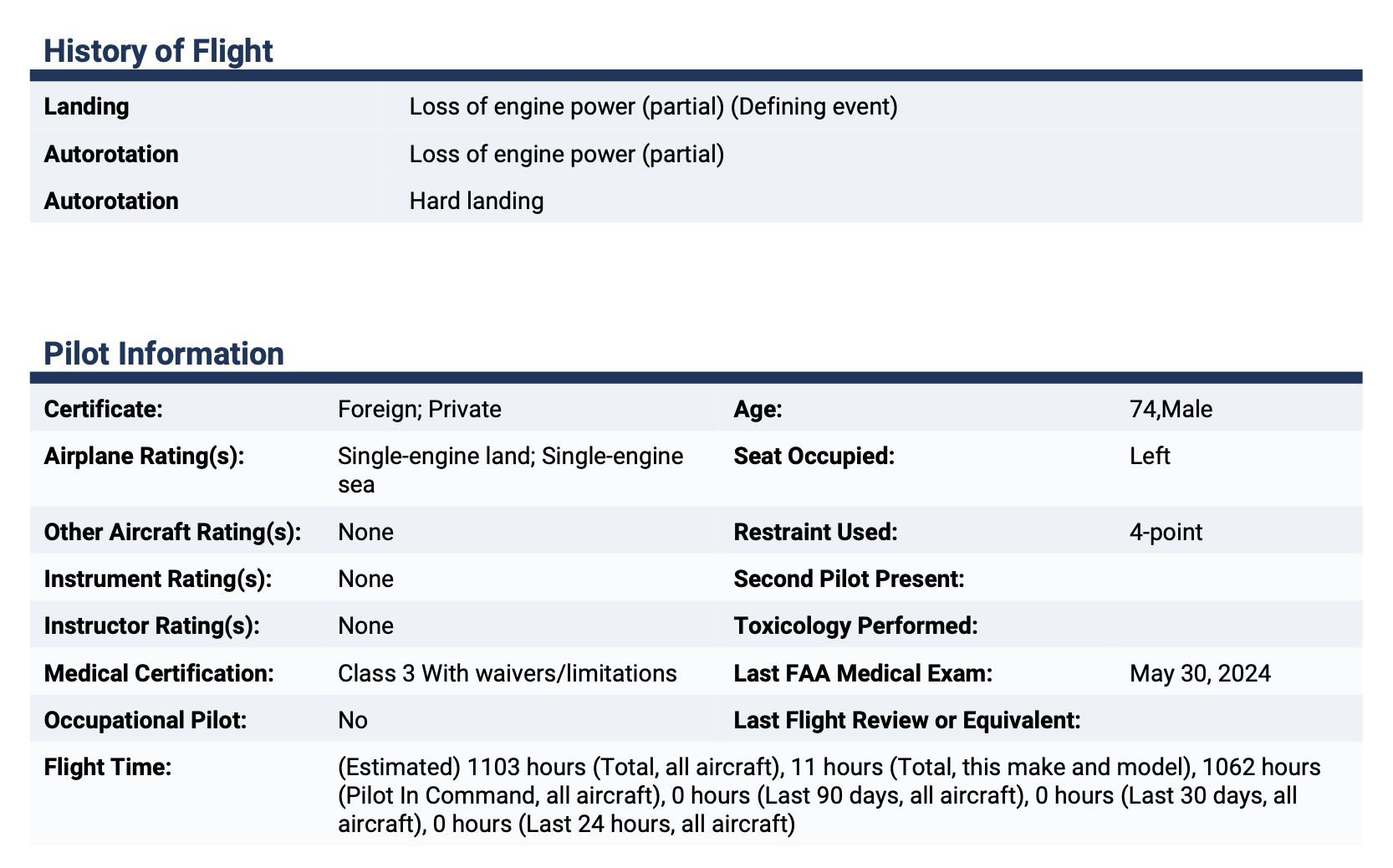
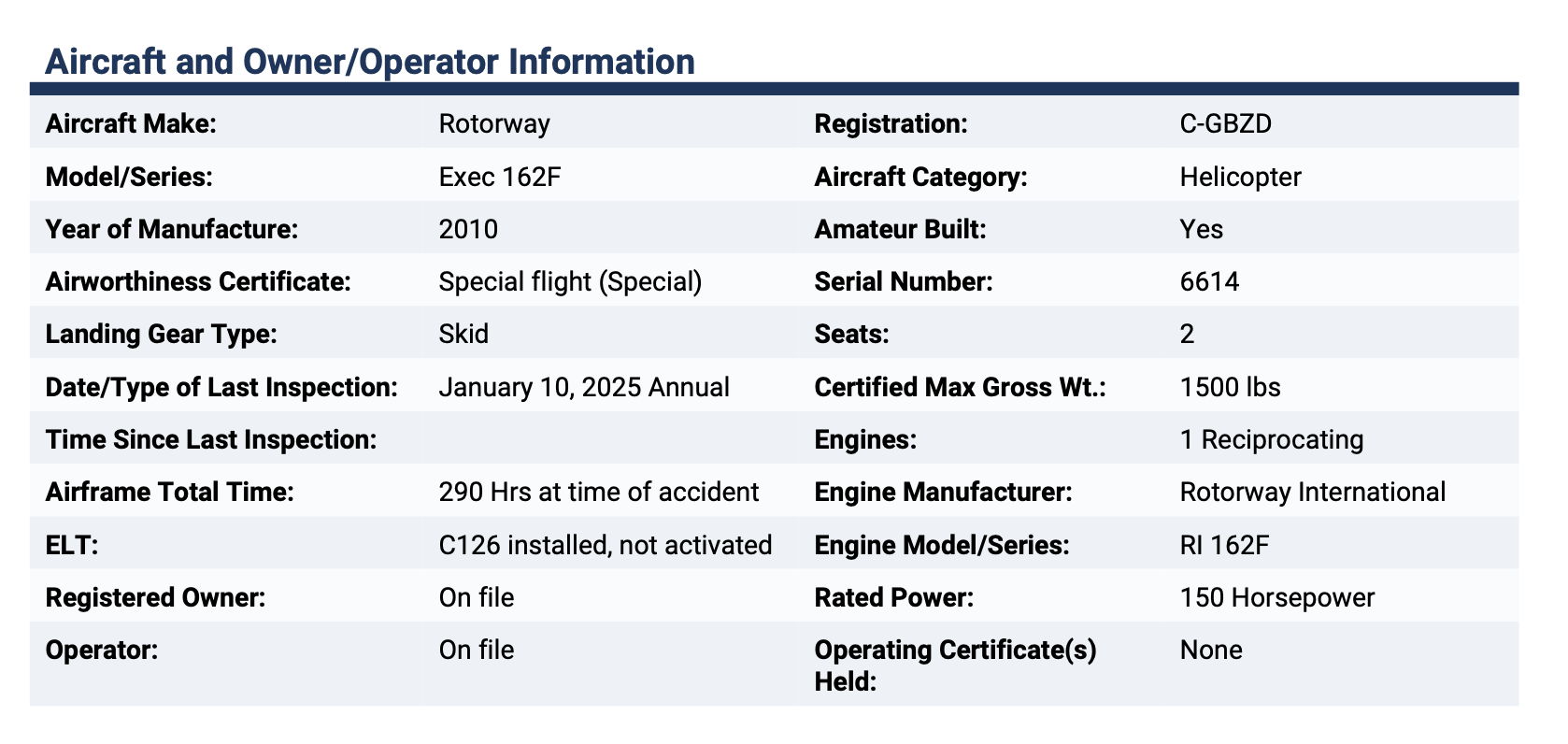
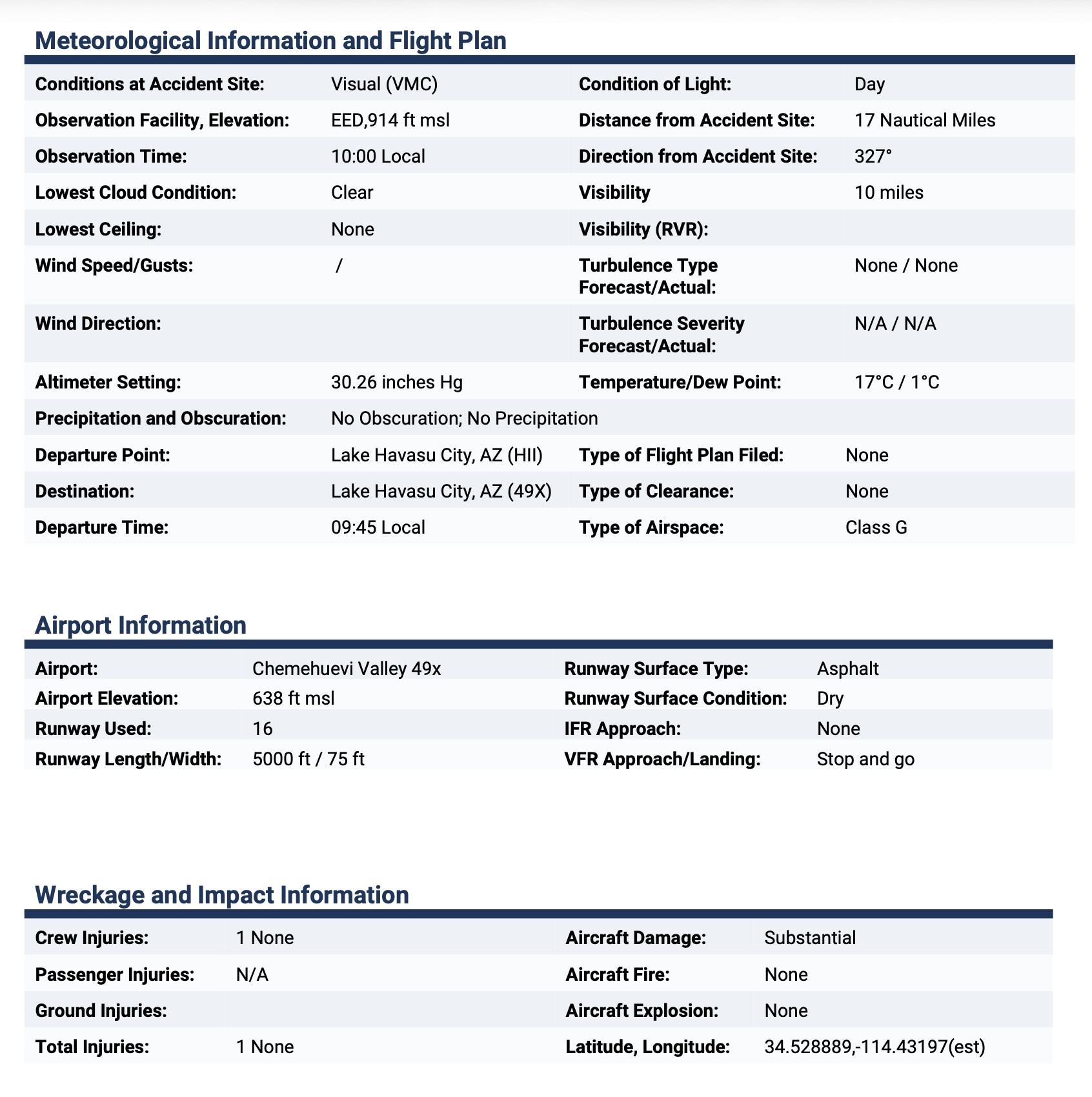
The pilot/owner of an amateur-built helicopter reported that, while transitioning through translational lift for landing at about 30 ft above ground level with near-zero forward airspeed, the engine experienced a loss of power. The pilot/owner attempted to perform an autorotative landing by increasing collective and applying left pedal, and the helicopter subsequently experienced a hard landing, bounced, and came to rest on the edge of the runway at an 45°angle. The helicopter then rocked backward, resulting in substantial damage to the tailboom and tail rotor blades.
The pilot’s post-accident examination of the engine revealed that it started normally during a test run; however, the engine would not accelerate above idle power. Further examination
determined that the throttle cable was disconnected due to a missing retaining nut. The pilot reported that he had installed a nyloc self-locking nut, but the bolt threads did not extend sufficiently into the nut to engage the nylon insert and secure the nut. As a result, the nut separated in flight, which allowed the throttle to move to the idle position and resulted in a loss
of engine power.
Probable Cause and Findings
The National Transportation Safety Board determines the probable cause(s) of this accident to be:

The pilot’s improper securing hardware installation, which resulted in a loss of throttle control and a loss of engine power.
Factual Information
WATCH ROTOR PRO YOUTUBE CHANNEL: https://buff.ly/3Md0T3y
You can also find us on
Instagram - https://www.instagram.com/rotorpro1
Facebook - https://www.facebook.com/rotorpro1
Twitter - https://twitter.com/justhelicopters
LinkedIn - https://www.linkedin.com/company/rotorpro