|
Sep
28
2026
|
|
Posted 20 days ago ago by Admin
|
|
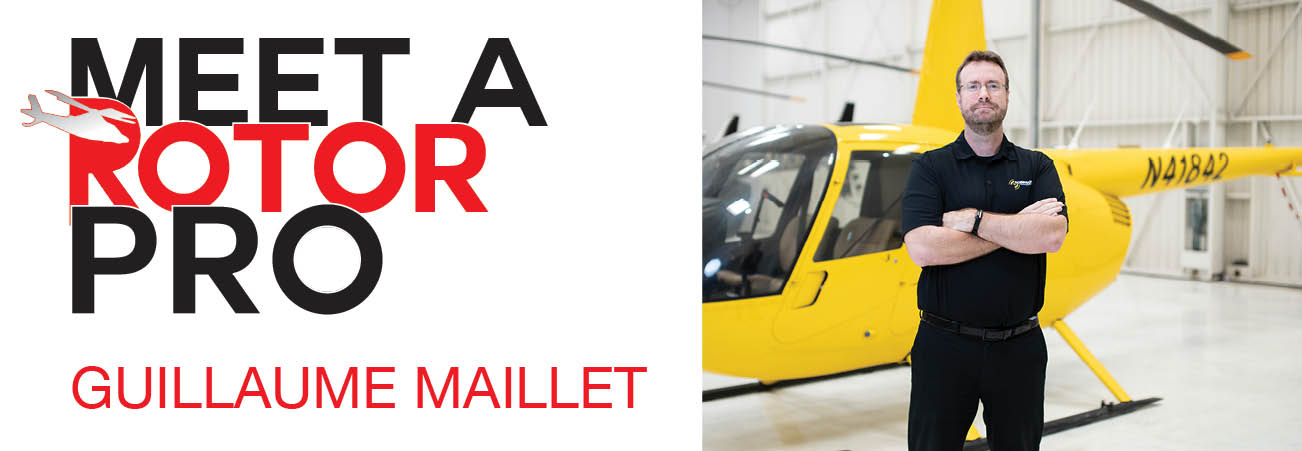
RPMN: What is your current position?
I am the chief instructor for Robinson Helicopter Company.
RPMN: Tell me about your first experience with helicopters.
My first helicopter ride was in a Hughes 500 when I was about five years old, through my father’s work. Unfortunately, I was too young to remember much about it. The first one I really remember, was in a Bell 47 in Australia when I was 15. By then, my interest in helicopters was already well established, so that flight was a memorable experience.
RPMN: How did you get your start in the helicopter industry?
After completing my flight training, I purchased a stake in a flight school. That opportunity allowed me to become involved in nearly every aspect of the operation, from flight instruction to day-to-day operations and management. It gave me a broad understanding of the industry early in my career and provided a strong foundation for the opportunities and experiences that followed.
RPMN: When and how did you choose the helicopter industry? Or did it choose you?
A little bit of both. When I was a kid, my older brother built model airplanes, and naturally I wanted to follow in his footsteps. I remember looking through the shelves at our local hobby shop, but none of the airplane models really caught my attention. Then, tucked away near the bottom of the display, I spotted a model of an Alouette II. Something about it immediately caught my interest. I built that model, then another helicopter, and before long I was buying books about helicopters and trying to learn everything I could about them. Looking back, finding that Alouette II model was probably the moment that set me on the path I have followed ever since.
RPMN: Where did you get your start flying or maintaining professionally?
I began my professional flying career in Southern California as a flight instructor. From there, my career gradually expanded beyond flight instruction into operational management, pilot examining, and the development and delivery of training programs.
RPMN: If you were not in the helicopter industry, what else would you see yourself doing?
Helicopters have never really felt like just a job to me. It is what I have always wanted to do, so imagining myself doing something completely different is surprisingly difficult. After more than 30 years in the industry, I still haven’t come up with a good answer to what I would be doing instead.
RPMN: What do you enjoy doing on your days off?
I enjoy spending time at home with my family. That said, I’m never too far removed from helicopters. I usually have a book or article nearby, or I find myself working on some type of training project. I genuinely enjoy learning, developing training material, and finding better ways to explain and teach different aspects of helicopter operations.
RPMN: What is your greatest career accomplishment to date?
Having had the opportunity to contribute to helicopter safety through training throughout my career. Whether it has been helping a student earn a certificate, mentoring an instructor, or developing and improving training programs, each has been rewarding in its own way. Ultimately, knowing that something I have taught, developed, or shared may help a pilot make a better decision or operate a helicopter more safely is probably the accomplishment that means the most to me.
RPMN: Have you ever had an ‘oh, crap’ moment in helicopters? If so, summarize what happened.
Early in my flight instructor career, I was conducting a night training flight with a student. Shortly after departing the airport, about a mile from the runway, I noticed a red and a green light through the right side of the windshield. For a moment, my brain simply did not register what I was looking at. By the time it did, I realized we were on a direct collision course with a Schweizer 300, looking almost straight at its windshield. My reaction was completely instinctive; I immediately took the control and rolled the aircraft left. To this day, I still do not understand how we missed each other. It happened incredibly quickly and left a lasting impression on me. More than anything, it reinforced how difficult another aircraft can be to see at night and how quickly an otherwise routine flight can turn into a critical situation.
RPMN: If you could give only one piece of advice to new pilots, mechanics, or support personnel, what would it be?
Stay proficient. Earning a certificate is only the beginning of the learning process. Aviation demands continuous learning, regular practice, and an honest assessment of your own abilities. Never allow experience to replace proficiency and always maintain the humility to recognize that there is something more to learn and something you can do better.
RPMN: In your view, what is the greatest challenge for the helicopter industry at this moment in time?
Training standardization. Across the industry, instructors, flight schools, and training organizations often develop their own techniques, procedures, and training philosophies. Some are excellent, while others may fall short, but the result is considerable variation in how fundamental skills, procedures, and aeronautical decision-making are taught.
I believe we need greater consistency in the fundamentals by establishing a common training baseline while still allowing instructors to bring their own experience and perspective into the learning environment. Standardization should not eliminate individuality or discourage different teaching techniques; rather, it should ensure that, regardless of where or with whom someone trains, the essential knowledge, skills, procedures, and safety principles are taught to a consistent standard.
I believe improving that consistency represents one of the greatest opportunities we have to improve training quality and, ultimately, safety across the helicopter industry.
READ MORE JUL/AUG ISSUE
READ MORE ROTOR PRO: https://justhelicopters.com/Magazine
WATCH ROTOR PRO YOUTUBE CHANNEL: https://buff.ly/3Md0T3y
You can also find us on
Instagram - https://www.instagram.com/rotorpro1
Facebook - https://www.facebook.com/rotorpro1
Twitter - https://twitter.com/justhelicopters
LinkedIn - https://www.linkedin.com/company/rotorpro1