|
Aug
31
2026
|
|
Posted 42 days ago ago by Admin
|
|
WATCH VIDEO
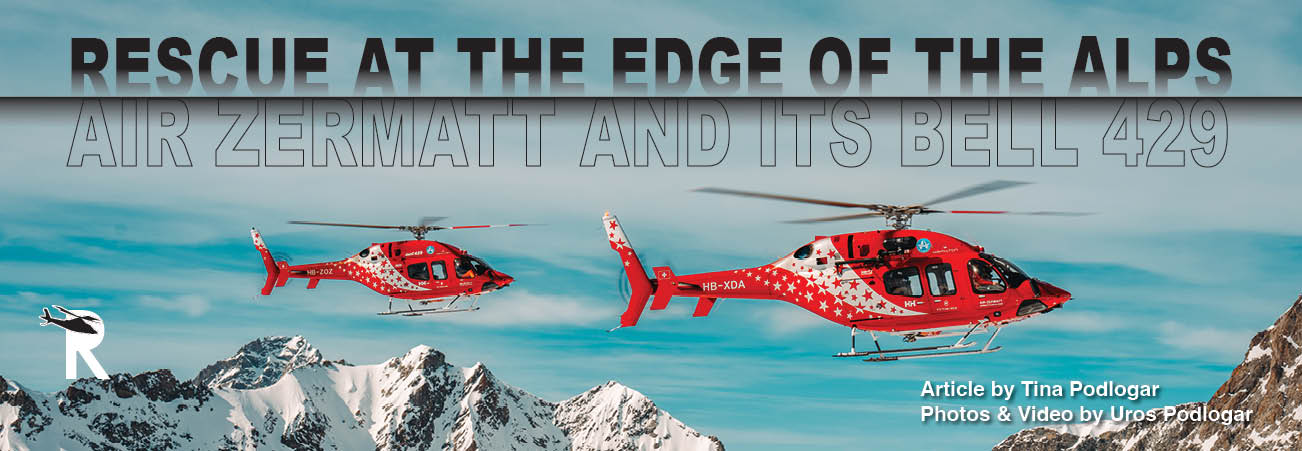
Switzerland may appear small on a map, measuring barely 348 kilometers (216 miles) from east to west, yet it boasts a remarkably big, dramatic landscape. From a distance, the Swiss Alps appear as picturesque white summits, deep valleys and glaciers beneath the sky. In reality, the Alps are constantly changing, shaped by wind, snow, rockfall, avalanches, and the people who live, work and travel in them. Switzerland is home to 48 mountains rising above 4,000 metres; 41 of these mountain tops are concentrated in the Valais Alps and among them is the world-famous Matterhorn.
In 1968, Air Zermatt began operations with one helicopter, an Agusta-Bell 206A Jet Ranger, beneath the unmistakable silhouette of this majestic mountain. The company was founded by Beat H. Perren, a pharmacist who became vice-president of Zermatt.
From the early beginning, the mission of this company was practical – to provide fast medical access and rescue capability for people living in, working in, and visiting the high-alpine region.
Now, more than half a century later, Air Zermatt’s red aircraft have become inseparable from life in the high Swiss Alps. For a team operating in such demanding and unforgiving terrain, choosing the right helicopter is every bit as important as the skill and experience of the crews flying it. One aircraft that has become central to many of its missions is the Bell 429.
Demanding Mountain Missions
Air Zermatt CEO Daniel Aufdenblatten said, “Air Zermatt has a wide variety of services, from tourist and transport flights to our training center, through which we pass on our knowledge and experience to other professionals around the world. Nevertheless, our company is undoubtedly best known for its rescue missions in the mountains of Valais.”
Rescue missions in this part of the world are unlike anywhere else. They rank among the most demanding helicopter operations, confronting crews with high altitudes, rapidly changing weather, strong winds, turbulence, downdrafts, narrow valleys, limited landing sites, cables and complex terrain. “A mission can change within minutes. The pilot must always think about power margin, escape routes, and visibility. In these Alps, the environment is never passive, it is always a crucial part of the mission,” said Aufdenblatten.
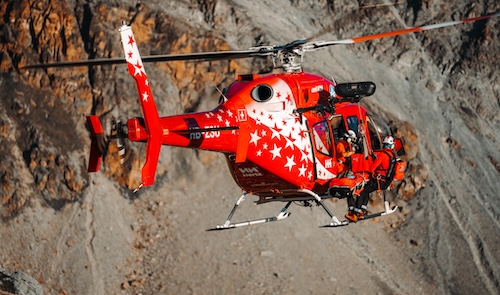
With decades of experience operating in some of the world’s most demanding alpine conditions, Air Zermatt knows precisely what it requires from a rescue helicopter. The company acquired its first Bell 429 in 2012 and today operates three of them. Choosing this aircraft was logical.
Built for the Mountains
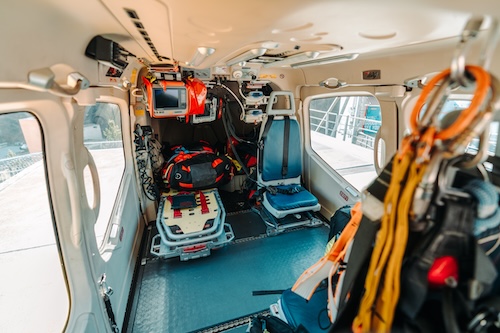
This twin-engine helicopter is highly suited for such rescue missions as it combines strong high-altitude performance and manueuverability with a spacious, adaptable cabin designed to accommodate medical crews, patients, and rescue equipment. Its flat-floor interior and large doors allow crews to load stretchers quickly and reconfigure the cabin for different missions, while its advanced avionics and autopilot help reduce pilot workload in challenging terrain and difficult weather. “The Bell 429 is well suited to our missions because it combines strong performance with a spacious medical cabin, all while remaining certified under FAR Part 27,” explains Aufdenblatten.
Air Zermatt’s Bell 429s are configured specifically for rescue and medical operations, allowing the aircraft to support a wide range of missions across the Valais Alps. When considering its medical flights, one thing that stands out with the Bell 429 is that the helicopter is extremely stable even in high winds, which are not unusual for these mlountains.
Their equipment includes a complete EMS fit, rescue hoists, and specialized systems for human external-cargo operations, including double hooks and load mirrors. The aircraft are also equipped for night operations and are compatible with night-vision goggles.
Carrying out technical or rescue hoist missions at altitudes of around 4,800 meters (15,748 feet) is demanding in itself, making complete confidence in the aircraft essential. The Air Zermatt pilots value the Bell 429 for the reserve of power it provides, particularly as missions move higher into the mountains. Its rotor system, with its strong tail-rotor authority, allows crews to maintain precise control in conditions where other aircraft may begin to approach their limits. Even in strong crosswinds of 35 to 40 knots, the helicopter remains responsive and gives pilots the control they need during delicate hoist operations.
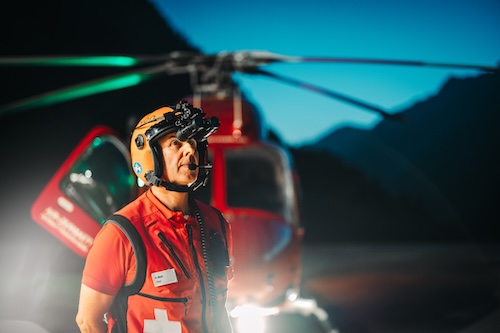
This versatility allows the crews to adapt the aircraft quickly to the demands of each operation. The Bell 429 may be used for an urgent patient transfer on one mission and, shortly afterwards, for a complex hoist rescue from an exposed mountain face or a confined location where landing is impossible. In such environments, the ability to operate safely at night, position rescuers precisely, and transport patients under continuous medical care can make a decisive difference. “The Bell 429 gives us an excellent balance of power, stability and cabin capability,” said Aufdenblatten.
For Air Zermatt, this combination of performance, safety, and flexibility is especially important. A mission may begin as a routine patient transfer and quickly turn into a technically demanding high-altitude rescue where confined landing areas, powerful downdrafts and changing weather leave little margin for error.
The Bell 429 is also particularly valuable when transporting patients to a hospital. Operations to and from certain hospital heliports are congested. Other hostile environments must meet Performance Class 1 requirements, meaning the helicopter must be capable of safely continuing or rejecting the operation after an engine failure. As a twin-engine aircraft capable of meeting these demands, the Bell 429 provides Air Zermatt with the redundancy and operational flexibility required for critical patient transfers.
Four Seasons of Rescue
The Swiss Alps are a year-round destination, which means there are few quiet months for Air Zermatt’s crews. From winter rescues and medical transfers to summer hoist operations high in the mountains, the pilots remain busy throughout the year. The nature of the work changes with the seasons, but the demands placed on both crews and aircraft remain high.
“In summer, many missions are linked to mountaineering. Crews respond to falls, crevasse accidents, exhausted climbers, and emergencies on ridges, glaciers and extremely steep terrain. These operations often require precise hovering, hoist or long-line work, and close coordination with mountain rescue specialists, sometimes in locations where landing is simply not possible,” says Aufdenblatten. “On the other hand, winter brings a different set of challenges. Skiing accidents, collisions on the slopes and avalanche incidents become more frequent, while flat light, rapidly changing weather and heightened avalanche risk can make already difficult missions even more complex. Holiday periods may also bring several simultaneous call-outs, requiring crews to make quick decisions about aircraft availability, priorities, and the safest way to respond.”
At the same time, many missions are not seasonal at all, including medical emergencies, traffic accidents, and urgent patient transfers. Yet, no mission takes precedence over the safety of the crew. When conditions become too demanding, the plan must change, and in the most difficult circumstances, the operation may have to be aborted. Aufdenblatten said, “Such decisions are made collectively. If the available safety margin is insufficient, the crew reassesses the situation, reduces weight, changes the approach or brings in ground rescue teams. It is not uncommon for a mission to begin with Plan A and progress to Plan E before the patient finally reaches the hospital. In this environment, flexibility is not simply an advantage; it is essential.”
Once the technical decisions have been made and the aircraft has returned to base, some missions remain with the crews for years. “A few are deeply ingrained in my memory, including major incidents such as the bus accident in Sierre and the fire in Crans-Montana,” says Aufdenblatten. “Others stay with you because of the tragic circumstances involved, or because you remain in personal contact with the patients or their relatives. Yet, it is not only the difficult missions that leave a lasting impression. Many successful rescues and happy endings are just as unforgettable.”
Vital Aircraft for the Alps
In the end, the Bell 429’s value to Air Zermatt lies in how naturally it fits the company’s way of working. It offers the performance and stability required, the space needed for medical care and the reliability crews depend on when conditions leave little room for error. More than a capable aircraft, it has become a trusted part of a system built around preparation, teamwork, and constant adaptation.
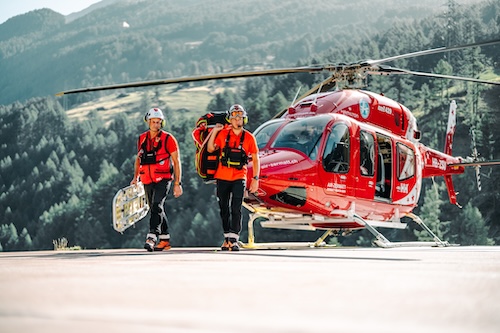
This all feels distinctly Swiss. Switzerland is a country that has carved railways through rock, built roads in high mountain passes and connected isolated communities through some of Europe’s most difficult terrain. In Valais, the helicopter forms another vital link in that network, reaching places that roads, trains, and even mountain rescue teams cannot always access quickly enough.
For Air Zermatt, the Bell 429 is far more than a means of transport. It is a flying intensive-care unit, a rescue platform, and in the most critical moments, a bridge between an exposed mountainside and the safety of the valley below. In a region where distance is often measured not in kilometers, but in altitude, weather and access, that bridge can make all the difference.
WATCH VIDEO
READ MORE JUL/AUG ISSUE
READ MORE ROTOR PRO: https://justhelicopters.com/Magazine
WATCH ROTOR PRO YOUTUBE CHANNEL: https://buff.ly/3Md0T3y
You can also find us on
Instagram - https://www.instagram.com/rotorpro1
Facebook - https://www.facebook.com/rotorpro1
Twitter - https://twitter.com/justhelicopters
LinkedIn - https://www.linkedin.com/company/rotorpro1