|
Jun
29
2026
|
|
Posted 111 days ago ago by Admin
|
|
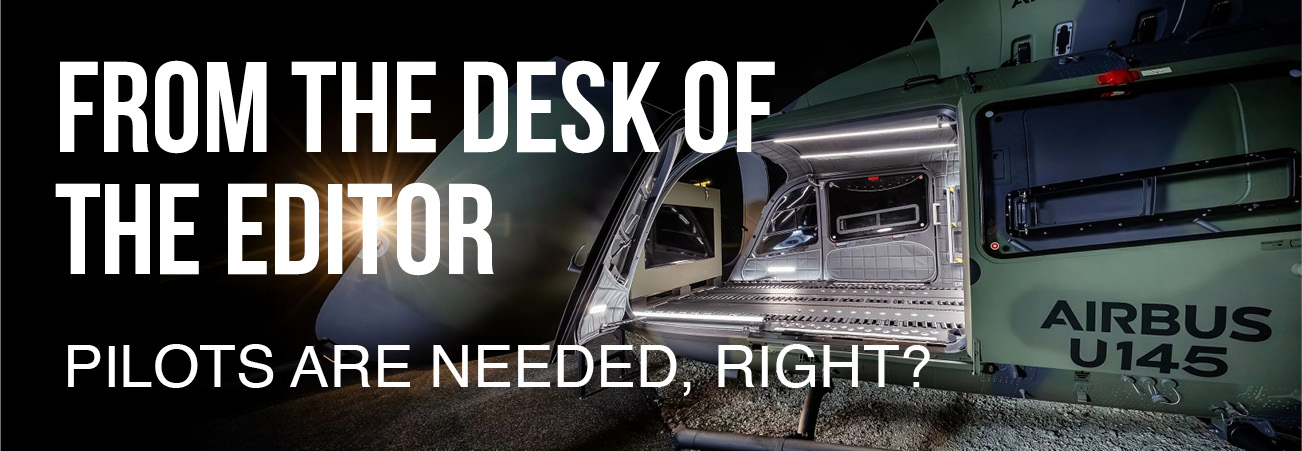
For decades, the rhythmic, thumping heartbeat of a helicopter rotor has been a sound of hope. Whether tracking a suspect through a darkened suburb, hoisting a stranded hiker from a crumbling cliffside, or rushing a critical patient to a trauma center, public safety aviation has relied on a singular, indispensable component: the human pilot.
Over my three decades of flying helicopters, I recall theoretical conversations with colleagues about a future in which pilots are not needed. Of course, we would chuckle at the possibility while providing a dozen reasons as to why that eventuality would never happen. However, as we watch the rapid evolution of unmanned aircraft systems (UAS) and autonomous flight technology, a pressing question looms over the hangar doors: Are we flying toward a future where the cockpit is entirely empty?
It is easy to look at the staggering capabilities of modern drones and assume the pilot’s days are numbered. Today’s unmanned aircraft can loiter for hours, map wildfire perimeters with thermal precision, and enter hazardous environments where no commander would risk a human crew. They are cheaper to operate, safer to lose, and becoming smarter by the day.
Yet, to argue that technology will completely ground our public safety pilots is to misunderstand the uniquely chaotic nature of emergency response.
Automated systems thrive on predictability, data, and logic. Public safety thrives on the exact opposite. A search-and-rescue mission in a dense mountain canyon isn’t just about calculating coordinates; it requires split-second spatial awareness, navigating unpredictable micro-climates, and managing the delicate physics of a hoist rescue. When a routine patrol transforms into an active crisis, a human pilot brings split-second intuition, a capacity for rule-bending improvisation, and real-time leadership that a remote operator or an algorithm simply cannot replicate.
Instead of an eviction notice for pilots, the advent of unmanned aircraft represents a powerful shift in responsibilities. We are not looking at the death of public safety pilots, but rather their evolution. The future belongs to a hybridized sky. Perhaps tomorrow’s airborne law enforcement officers and flight paramedics will act as mission commanders, piloting their own aircraft while simultaneously orchestrating a fleet of tethered or autonomous drones that serve as extended eyes and ears.
Technology will undoubtedly absorb the "dull, dirty, and dangerous" tasks of aerial policing and disaster management, but when lives hang in the balance and conditions turn volatile, the ultimate fail-safe remains human judgment inside the cockpit. The rotor beat will continue—it will just be backed by a digital orchestra.
READ MORE MAY/JUNE ISSUE
READ MORE ROTOR PRO: https://justhelicopters.com/Magazine
WATCH ROTOR PRO YOUTUBE CHANNEL: https://buff.ly/3Md0T3y
You can also find us on
Instagram - https://www.instagram.com/rotorpro1
Facebook - https://www.facebook.com/rotorpro1
Twitter - https://twitter.com/justhelicopters
LinkedIn - https://www.linkedin.com/company/rotorpro1