|
Mar
30
2026
|
|
Posted 204 days ago ago by Admin
|
|
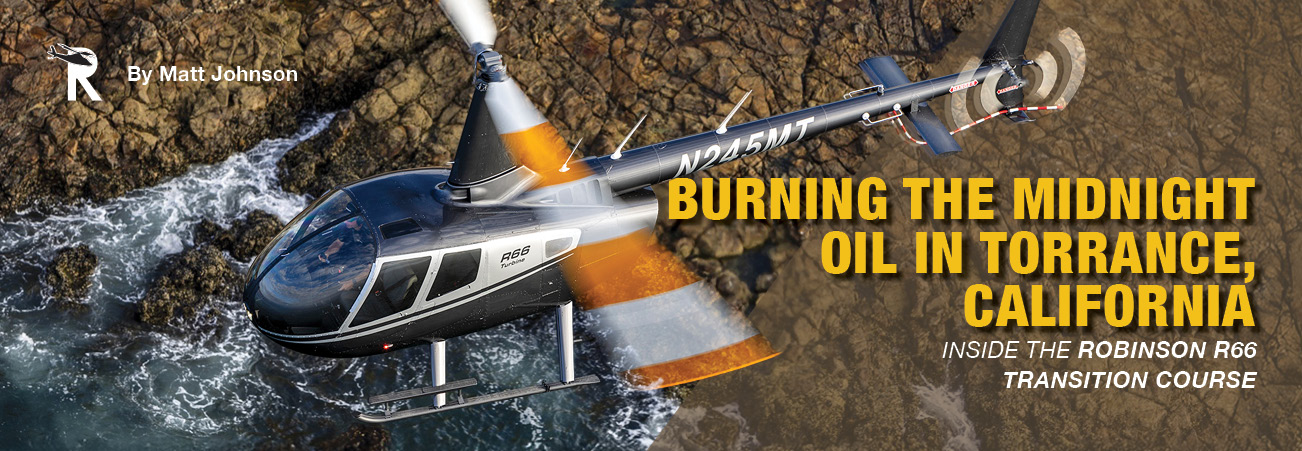
To an outsider, it might appear that the leadership and training staff at Robinson Helicopter Company (RHC) work around the clock— in many ways, they do. Under the leadership of President and CEO David Smith and the steadfast dedication of Chief Flight Instructor Guillaume Mailet, the company continues to reach new heights in its training excellence. RHC’s long-standing Safety Course, now in its 42nd year, has been refreshed with a modern approach that emphasizes accident causation trends and contributing factors. Building on that foundation, the company recently added its Flight Instructor Standardization Course, which has already graduated more than 80 instructors worldwide since its introduction last year.
But that isn’t all that’s new! In Q1 of 2025, the company introduced its new R66 Transition Course. The overarching goal of Guillaume, known as “G” to his colleagues and students, was to design a course that would ensure pilots are not only qualified to operate the R66 but do so with the utmost efficiency and safety. “G” and his team spent hundreds of hours developing a comprehensive program that covers all essential aspects of the R66 aircraft and its systems. “I work for you, the customer, the student, the owner, the operator of our brand. I want to ensure that you are armed with every ounce of knowledge to operate that aircraft safely,” said Guillaume. In developing the course, their training materials went through a rigorous vetting process by numerous members and disciplines of the RHC team.
It should come as no surprise that an official airframe-specific transition training program was developed; generally speaking, all manufacturers offer factory-level courses for their turbine models. And the timing couldn’t be better because the R66 has made a name for itself throughout the world, with more than 1,500 R66 airframes delivered since the first delivery in October 2010. The proverbial “tipping point” for the course came together as the new leadership settled into their roles. Guillaume noted that during their safety courses, alarming observations were made: several recurring gaps were observed not only in pilots' knowledge of helicopter systems but also in the consistent application of standardized safe operating procedures with their airframes. While many of these areas are addressed during their Safety Course, the team recognized the need to delve deeper by examining each model in greater depth, starting with the R66. Another glaring observation was that many pilots reported they never received any “formal” transition on the R66, often being told, ‘It is just a big R44.’ The RHC team felt that this mindset and folklore about the aircraft overlooks the significant operational differences between the two aircraft and leaves pilots underprepared for the unique characteristics of the R66. “To correct this, we developed a comprehensive course and a dedicated systems manual to provide pilots with a reliable, structured source of training and reference material,” said Guillaume. Although in its infancy, the course has already had attendees from various sectors of the industry, including external load operators, corporate pilots, and instructors.
Real-World Training
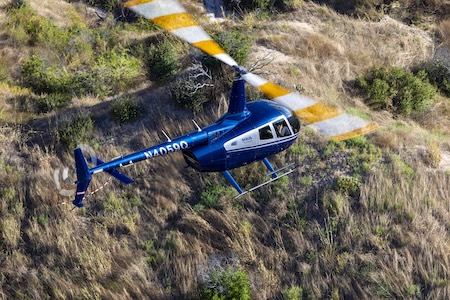
I had the opportunity to attend the new R66 Transition Course this past summer, and it did not disappoint. Suffice it to say, I have previously attended “factory schools”, and I thoroughly enjoyed all of the experiences, as I always value the opportunity to dig deep into aircraft systems. That said, I found the R66 course took a distinctly different approach compared to many other transition programs. While traditional transition courses tend to focus primarily on systems, the R66 course was designed to go further by emphasizing the operational knowledge that directly supports safe, real-world operation.
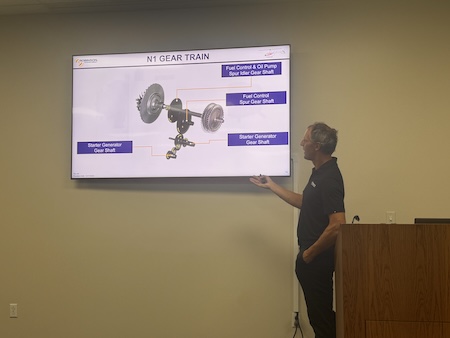
To say that the course instructional team, consisting of Guillaume and RHC Instructor Pilot Anton Immler, covered the aircraft systems in detail would be an understatement. Still, their delivery also encapsulated the connection between the various systems and the aircraft's limitations and emergency procedures. I found this approach to be a tremendous gain, not only for a “gee-whiz” technical understanding but also for providing a clear appreciation of the rationale behind the normal and emergency procedures listed in the R66 flight manual.
I found that the course had minimal downtime, and when a question about a part, component, or specific system came up, we could easily go out onto the factory floor to see that particular part. Another breath of fresh air was that the RHC team went much more in-depth with the performance charts than I have become accustomed to in other training programs. I have observed firsthand as a pilot examiner that this correlation leads to more meaningful training and a better understanding, which better prepares pilots to apply what they have learned in the real-world environments they may encounter.
Another academic core element of the course focused on airworthiness and regulatory requirements, aiming to ensure that pilots completing the course will leave with a firmer grasp of both the safety and legal responsibilities associated with operating the aircraft. Familiarity with airworthiness documents such as Service Bulletins, Airworthiness Directives, and Service Alerts is utilized during the course to further strengthen attendees' operational understanding of the R66.
More Benefits
Two other benefits that stood out during the course were that RHC also incorporates lessons from past incidents and accidents, using them to highlight specific operational issues and reinforce key safety concepts taught during the course.
Additionally, their course does not overlook installed systems, such as the autopilot. They believe that if the equipment is part of the aircraft, pilots should be fully trained to operate it proficiently. This was highlighted not only during the in-depth, 24-hour academic portion of the course, but also during the flight portion of the course!
Flight Instruction
The flight portion of the course was every bit as impressive as the ground training. Over the span of four flights, we logged a total of five flight hours—each one meticulously structured to build confidence and skill. Just as in the classroom, the thoroughness and organization of the flight syllabus were evident from the very start.
Following an extensive pre-flight inspection, I was determined to absorb as much as possible since I had no prior experience in the R66 airframe. Fortunately, I was paired with RHC Instructor Simon Jones, a renowned RHC instructor for 22 known for his reassuring demeanor, exceptional instructor skills, and engaging personality. Before each flight, Simon conducts a comprehensive briefing outlining the maneuvers to be covered. True to form, he left no stone unturned—thoroughly addressing both fundamental and advanced flight techniques. “This is not a quick checkout flight, and you’re done; we spend the time making sure the attendees understand the R66, from focusing on several starts to reviewing all of the maneuvers. We want course attendees to leave feeling comfortable in the aircraft and operating it safely,” said Jones.
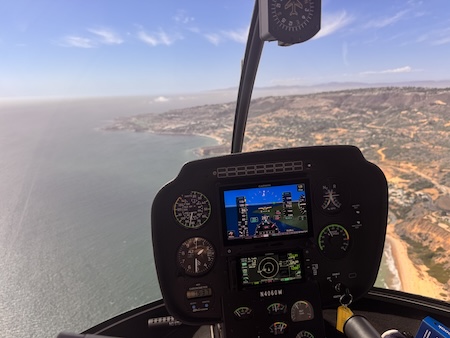
Like during the ground instruction, the RHC flight team excelled at emphasizing the distinctions between the R44 and R66, and Simon reinforced these lessons through clear, detailed maneuver explanations that made the differences truly resonate. I wasn’t alone in finding this valuable. Rui Kakazu, a corporate pilot who traveled from Brazil to attend the course, reflected on the experience, “The pilot needs to shift mindset and realize that, even though the aircraft may look similar, the R66 flies and behaves in a completely different way than the R44; they really helped me understand what changes from one aircraft to another.”
Best-Kept Secret
The RHC team has truly hit a home run with their new R66 Turbine Transition Course. In my opinion, this is one of the best-kept secrets in helicopter training—though it won’t be for long. Offered at a fraction of the cost of most factory schools, the program delivers a comprehensive experience that combines detailed, yet practical, ground instruction on the R66 with world-class, unmatched flight training in the airframe. For anyone seeking an exceptional introduction to turbine operations, this course represents an outstanding opportunity. I only wish that this program had been around when I was coming up in the industry.
In an interview with Robinson Helicopter Company President and CEO David Smith, his passion for safety and training was evident and unmistakable. “At Robinson Helicopter Company, every course we offer—from our safety and recurrent training programs, to the Robinson R66 Transition Course—is focused on one fundamental objective: improving the safety of our pilots and our global fleet. Safety is not negotiable. That’s why we have significantly expanded both the number and variety of training options available, not only here in Torrance, but around the world” said Smith.
Stay tuned for more course options from RHC in the near future!
READ JAN/FEB ISSUE OF ROTOR PRO
READ MORE ROTOR PRO: https://justhelicopters.com/Magazine
WATCH ROTOR PRO YOUTUBE CHANNEL: https://buff.ly/3Md0T3y
You can also find us on
Instagram - https://www.instagram.com/rotorpro1
Facebook - https://www.facebook.com/rotorpro1
Twitter - https://twitter.com/justhelicopters
LinkedIn - https://www.linkedin.com/company/rotorpro1