|
Jan
19
2026
|
|
Posted 260 days ago ago by Admin
|
|
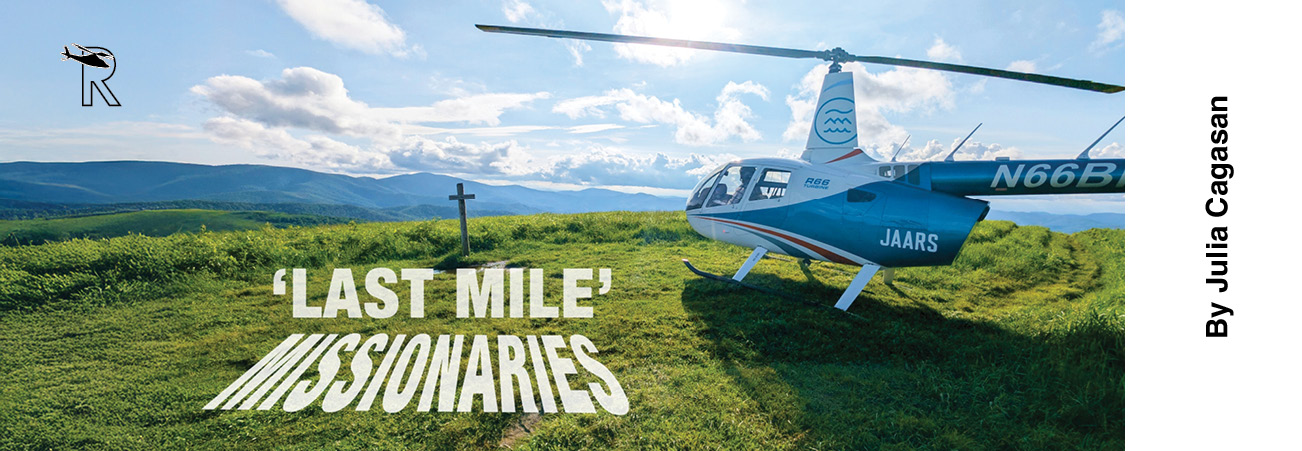
Swelling rivers overflowed their banks and blustering winds fell trees as Hurricane Helene hit the Appalachian Mountains on Friday, 27 September 2024. The Category 4 hurricane approached the coast of Florida earlier in the week, beginning its ravaging course across the United States Southeast. In western North Carolina, the floodwaters and wind quickly destroyed roads and cut off communication for the communities nestled in the mountains.
Within 24 hours, while most of the country was still stunned by the rising fatality numbers, several groups began organizing and deploying their aviation assets. Among these aviation assets was a JAARS Robinson R66 helicopter, which took off from Jungle Aviation and Relay Service (JAARS) Townsend (N52), North Carolina, the morning of the 28th to survey the Avery County Airport (7A8) and its surrounding area.
Avery County Airport has a longstanding history with the JAARS aviation training department. JAARS, a mission aviation organization that covers the “last mile” of missions across global geographical barriers, has trained their pilots in the mountains and airstrips surrounding 7A8 for 50 years. With the JAARS base located south of Charlotte, North Carolina, the local Appalachian Mountains provide specific mountain flying opportunities that reflect similar terrain challenges around the world.
By the Sunday after Helene hit, JAARS pilots and aircraft moved quickly into the familiar airport, setting up a temporary base of operations to serve the surrounding airstrips and community of Spruce Pine. From there, JAARS coordinated and maintained a database for dozens of volunteer aircraft. The remainder of the week involved both fixed-wing and rotorcraft flights to determine the feasibility of ground routes, to deliver supplies to affected areas, and to perform search-and-rescue efforts.
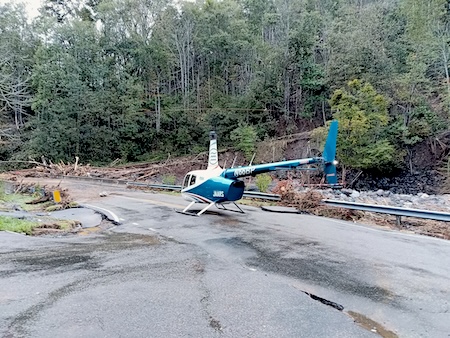
As the R66 flew over the ridges and valleys north of Mount Mitchell, JAARS pilots noticed a large ‘H’ spray painted in a residential yard. People below waved at the sight of a helicopter, their attempts finally successful. However, the R66 couldn’t land in the designated area. JAARS pilots Jeremiah Diedrich and Jeff Johnson radioed a nearby National Guard UH-72 Lakota, which was able to use its hoist and rescue team to assist the residents.
The JAARS helicopter flew a number of information gathering flights, following remote roads to where they ended from being washed out or blocked. Past that point, crews identified isolated regions and landed to determine what people needed.
Diedrich recounted, “The people who live in those parts of the mountains are just so resilient, thoughtful, caring. So many times, we would land in a place and they would say, ‘We’re doing OK, we’re taking care of each other. Find somebody who needs it more than us, we’re OK.’ That was really incredible to see how those people pulled together in community. Over the years, JAARS has been so blessed by the people in the town of Spruce Pine and the Avery County Airport area. To be able to help them in a small way in their hour of need was really the least we could do, but we were blessed to have the equipment and capability to help in a tangible way.”
Collecting information for the database of affected areas, delivering food and water supplies, and positioning rescue teams in strategic locations were benefits of the rotorcraft’s capabilities. In the wake of Hurricane Helene, it was a natural extension of JAARS global operations to perform such flights.
Main Mission
Using the unique capabilities of rotorcraft in remote areas is a hallmark of JAARS operations. JAARS uses special-purpose aircraft, boats, and off-road vehicles so that unreached people can receive God’s Word and his love. Beyond the reach of an airline flight, boat charter or bus route, live people who need God’s Word. The last mile of missions is the distance between unreached people groups and their access to the “gospel” or good news that God sent his one-of-a-kind Son, Jesus, to sacrifice Himself to death and ressurrect from the grave, so that whoever believes in Him will have all their sins forgiven and receive the gift of everlasting life.
Airline flights, trains, and buses cannot reach communities isolated by challenging geographical barriers. JAARS reduces the barriers of mountains, rivers, and deserts with its airplanes, helicopters, boats, motorcycles, and 4WD vehicles. Providing safe transportation for Christian missionaries eases those workers’ burdens and concerns about logistics, medical emergencies, and availability of supplies. Most importantly, JAARS delivers God’s Word, the Bible, from the first flight of a Bible translation team to the precious cargo of the first copies of their work in the local language.
JAARS began in 1948, when founder William Cameron Townsend decided that Bible translators and linguists needed a more reliable way of transportation and communication. The original acronym stood for Jungle Aviation and Radio Service but was later changed to Jungle Aviation and Relay Service to better represent the work being done today. First operating out of Latin America, JAARS later moved its base to Waxhaw, North Carolina, where it still provides a variety of air, land, and sea training. Equipped with the resources and skillsets they need, pilots and mechanics are then deployed overseas. JAARS Base is also a resource for sustaining overseas operations, from recurrency training to supplying parts and additional staff.
Global Reach
JAARS operations occur across the world, from water safety training for travelers on the Amazon River to motorcycle training in Togo. While JAARS pilots are loaned to different global organizations, Cameroon and Papua New Guinea are the primary overseas bases for aviation operations.
Cameroon
Stationed in Yaounde, Cameroon, is a Robinson R66 helicopter that flies to eight regions of the country. Prior to the R66, a Robinson R44 served these areas of Central Africa. However, as avgas importation became increasingly difficult, it became logistically optimal to transition to the R66’s turbine engine. The accessibility of jet fuel, the robust turbine capabilities, and the increased capacity for cargo and passengers were just a few of the benefits of transitioning to the R66. Particularly for flying in the mountains of Cameroon, the R66 provides a valuable additional power margin.
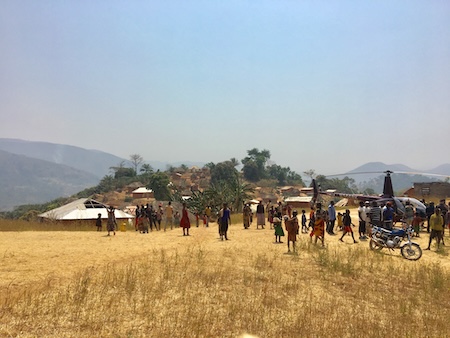
Working with the Cameroonian Baptist Convention (CBC), JAARS is able to assist with medical emergencies and needs across the country. Many of the large hospitals and health centers in Cameroon are run by the CBC, allowing various medical teams to be deployed on village outreaches. Most villages have a soccer field, which serves as a helicopter landing zone. Dental, optometry, and general health teams utilize the R66 for a week to visit and care for seven to eight villages at a time. Not only do they provide consultation and medication for physical needs, they also minister to the spiritual needs of the people. Providing the hope and comfort of everlasting life is an important part of their missions.
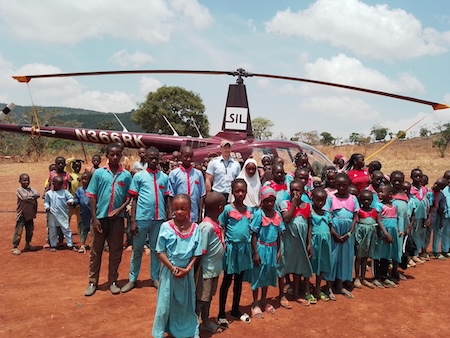
Aaron Oakes, helicopter pilot and mechanic in Cameroon since 2021, shared, “The opportunity to see people work with such isolated people groups - that’s something I never thought I’d get to see. It’s the kind of thing you read about.” After serving 22 years in the U.S. Army flying and fixing the AH-64 Apache, he and his wife evaluated their options. “[Mission aviation] was the only thing that really made sense. Every experience I’ve had in my career, both inside and outside aviation, has pointed toward mission aviation whether I knew it or not. It wasn’t something I set out to do, but it was definitely something you look back at and think: Wow, this is pretty straightforward.”
Many of the aviation staff, Oakes included, play multiple roles beyond aviation. From the chief of maintenance to helicopter pilots, staff participate in leading 4WD and motorcycle training. Providing local residents and translators with the skillsets to recover and maintain their vehicles makes their travel safer and more sustainable. Translators from organizations like Wycliffe Bible Translators, SIL Global, and Lutheran Bible Translators are then equipped to serve their language groups with a variety of transportation means.
Papua New Guinea
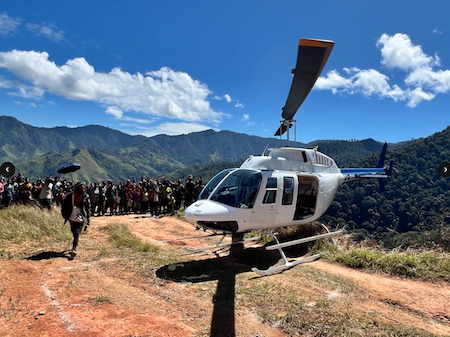
In the Oceania island nation of Papua New Guinea, a Bell 206 Long Ranger often takes off just after dawn to take advantage of good weather. With two Bell 206L3 helicopters in the country, JAARS transports cargo and passengers into densely forested mountain areas. With 55-gallon drums of Jet-A fuel and a medical evacuation litter kit, the Bell 206 makes logistical fuel storage trips and life-saving flights.
In the eastern highlands of the country, the Aiyura airstrip serves as the base of operations at 5,100 feet MSL. From this airport, flights serve communities across the country, navigating terrain that ranges from sea level to 12,000 feet within a small region.
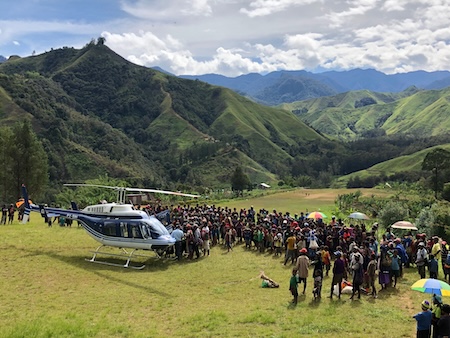
“We have to be very careful with monitoring weather and fuel planning,” explains Pilot Greg Raychard. “We have drums of fuel stored in strategic locations around the country. It’s common to refuel from drums several times a day out in the bush.” Coordinating fuel logistics, flying into remote airstrips and landing zones, and calculating weight-and-balance is often done using JAARS FlightSpan, an electronic flight bag (EFB) designed for remote aviation.
These flights in the bush serve similar purposes to the operations in Cameroon, transporting Bible translators and medical teams to communities where linguistic work and medical care can take place. In many villages, there are athletic fields or sport courts that allow helicopters to land where fixed-wing aircraft cannot.
To subsidize the cost of these flights, commercial flights are also flown by JAARS pilots and aircraft. JAARS’s aviation operations, and its pilots and their families, are also funded by generous supporting donors.
Training
To prepare for these overseas operations, helicopter pilots and mechanics begin their service at JAARS Base in North Carolina. The JAARS Helicopter Training Department primarily utilizes an R66, but also a Bell 206L4 for specific training. The flight instructors have significant experience from both fixed-wing and rotorcraft operations in various countries.
Pre-Field Training
After passing a technical evaluation and joining the organization, pilots and mechanics go through Pre-Field Orientation (PFO) before deploying overseas. The PFO flight curriculum for helicopter pilots includes 40 hours of flying and covers all operational aspects: external cargo training, loading and logistics (i.e. fuel positioning in areas with limited access), and mountain-specific training. North Carolina, with its Mount Mitchell, provides excellent terrain-factor training. Cloud and wind conditions in the mountains along with hot, high and heavy-weight operations in confined areas provide valuable experiences for trainees before they are assigned overseas.
Industry Training
With Robinson and Bell helicopters deployed around the world and stationed in the U.S., JAARS takes advantage of industry training by sending pilots and mechanics to manufacturers’ technical schools. Partnering with organizations like Ethnos360 Aviation, JAARS shares and obtains helicopter knowledge and training within the niche field of mission aviation.
Recurrent and Standardization Training
To ensure the continued proficiency of deployed pilots, recurrent and standardization training occurs at specific intervals. Whether pilots return to the U.S. base or check pilots travel to overseas bases, continuing the development of excellence and accountability to JAARS standards is an important aspect of training.
Conclusion
From North Carolina to Papua New Guinea, JAARS is able to use helicopters to accomplish the mission of sharing the love of God with unreached people. Pilots, mechanics, and administrators are able to use their skills to accomplish their God-given purposes around the globe. The eternal impact made by these people and their helicopters is made possible by financial supporters of JAARS. The prayers and generous provision of aircraft and funds from donors allows JAARS to cover the crucial “last mile” of missions. To connect with or learn more about JAARS, visit www.jaars.org or email: [email protected].
READ NOV/DEC ISSUE OF ROTOR PRO
READ MORE ROTOR PRO: https://justhelicopters.com/Magazine
WATCH ROTOR PRO YOUTUBE CHANNEL: https://buff.ly/3Md0T3y
You can also find us on
Instagram - https://www.instagram.com/rotorpro1
Facebook - https://www.facebook.com/rotorpro1
Twitter - https://twitter.com/justhelicopters
LinkedIn - https://www.linkedin.com/company/rotorpro1