|
Jan
12
2026
|
|
Posted 277 days ago ago by Admin
|
|
RPMN: What is your current position?
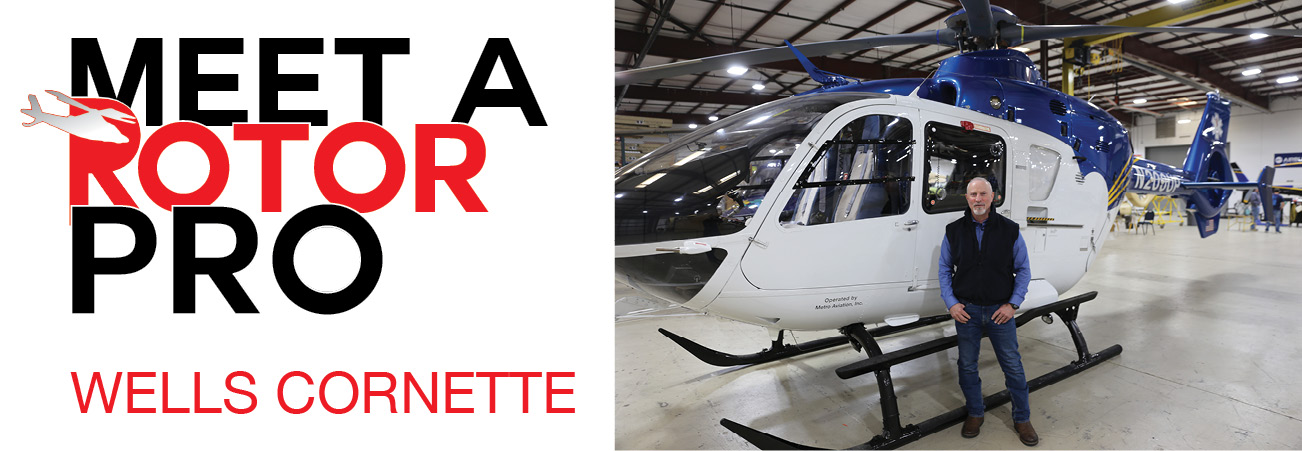
Rotor-wing chief pilot for Metro Aviation Inc.; it’s the best job in the company! I’m responsible for the hiring, training, currency, and qualification of approximately 600 pilots. I’m also a company instructor/check airman and still teach initial and recurrent flight training.
RPMN: Tell me about your first experience with helicopters.
My first flight was in the late ‘90s as a passenger in a Bell 206 Long Ranger for a Police Strike Force training competition and I was absolutely terrified. I was more afraid of the heights than of the machine. Several years later, I overcame that fear of heights during my initial flight training.
RPMN: How did you get your start in the helicopter industry?
I had a motorcycle riding school and one day I trained the then president and CEO of PHI. Out of curiosity, I asked him how much money pilots earn in a year. He stated that an S-92 captain usually made well over six figures. I immediately responded, “Well what’s an S-92 and where can I learn how to fly one?”
RPMN: When and how did you choose the helicopter industry? Or did it choose you?
It definitely chose me. I never had aspirations as a kid to be a pilot like most aviators do. I always had a fear of heights, so I never thought aviation would be a possibility. After meeting Lance Bosflug, I was so inspired by his six-figure answer that the fear of heights went out the window and within two weeks I sold everything I had and started the Professional Pilot training program at Bristow Academy in New Iberia, Louisiana. A few weeks into the program, I fell in love with aviation, and I’ve been completely hooked since.
RPMN: Where did you get your start flying or maintaining professionally?
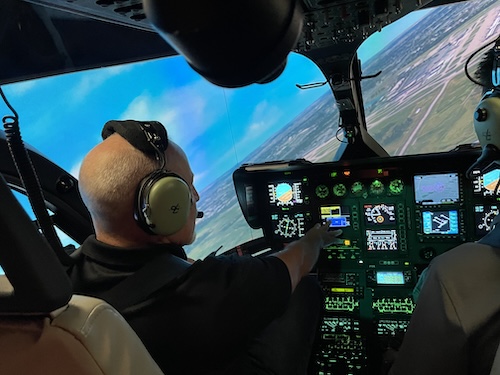
I initially started employment at Bristow Academy as a janitor and grounds keeper. This got my foot in the door as a CFII in 2011. A short time later, I went to my first Part 135 job at PHI Oil and Gas in 2014. Lance told me to go see him If I ever attained 1,500 hours. The day I turned 1,500, I went straight to Lance’s office. He said I never thought you would pull that off. He’d tried to deter me away from flight school. He said flight school would be a challenging way to live for a 40-year-old man, with having to live off of Ramen Noodles and ham sandwiches. Yet, that call to adventure seemed so inviting to me, so I just dove in headfirst and never looked back. I loved every minute of it. After being in the industry for 15 years now, I have yet to fly an S-92. During my basic indoc with Metro, I was introduced to the EC135 and since my time flying the line with the SPIFR EC135, I no longer have the desire to pilot the S-92.
RPMN: If you were not in the helicopter industry, what else would you see yourself doing?
This is a hard one because I love our Metro family. I enjoy coming to work every day and being surrounded by true professionals who all have the safety-first mindset. I can’t see myself doing anything else. The people I work with are truly like family.
RPMN: What do you enjoy doing on your days off?
I’m currently the USA BMX Louisiana State Champion. My entire family races BMX—yes, my wife races as well! I’m also a certified USA BMX coach, so when we are not racing, I’m conducting riding clinics for new riders of all ages. We are a very close family and do everything together as a team.
RPMN: What is your greatest career accomplishment to date?
My family. As most aviators know, to get through flight school is no easy task. It can be extremely taxing on your personal life. I’m very proud and thankful for my supportive wife and our 10-year-old triplet boys. There’s no way I would be where I am at today in my career without their love and support. I came home one day and told her, “Hey, we’re selling the house and all of our possessions so I can go to flight school” and she was 100% on board from Day One. We lived in a camper for two years during my flight training and slowly built our life back up and far beyond. As they say, “behind every successful man is a strong woman.” There’s never been a truer statement.
RPMN: Have you ever had an “oh, crap” moment in helicopters?
I was in a 700-foot AGL hover with a quartering tail wind trying to get the perfect camera angle for a passenger. I knew I was setting myself up for VRS, so I briefed my passengers on what could possibly happen. It finally started to settle and then the bottom fell out, but I was ready. I announced it and recovered with the traditional recovery technique.
RPMN: If you could give only one piece of advice to new pilots, mechanics, or support personnel, what would it be?
Always be in the mindset of this is an interview from Day One. Even if you are planning to just ask questions at a local flight school, dress appropriately and always present yourself well. This industry is smaller than you think.
RPMN: In your view, what is the greatest challenge for the helicopter industry at this moment?
Producing new pilots. It's very expensive and time consuming to get to the 1,500-hour mark or 2,000 hours for HAA operations. I would like to see someone create a financing option for flight training along with a pathway to a Part 135 operator.
READ NOV/DEC ISSUE OF ROTOR PRO
READ MORE ROTOR PRO: https://justhelicopters.com/Magazine
WATCH ROTOR PRO YOUTUBE CHANNEL: https://buff.ly/3Md0T3y
You can also find us on
Instagram - https://www.instagram.com/rotorpro1
Facebook - https://www.facebook.com/rotorpro1
Twitter - https://twitter.com/justhelicopters
LinkedIn - https://www.linkedin.com/company/rotorpro1