|
Dec
28
2025
|
|
Posted 298 days ago ago by Admin
|
|
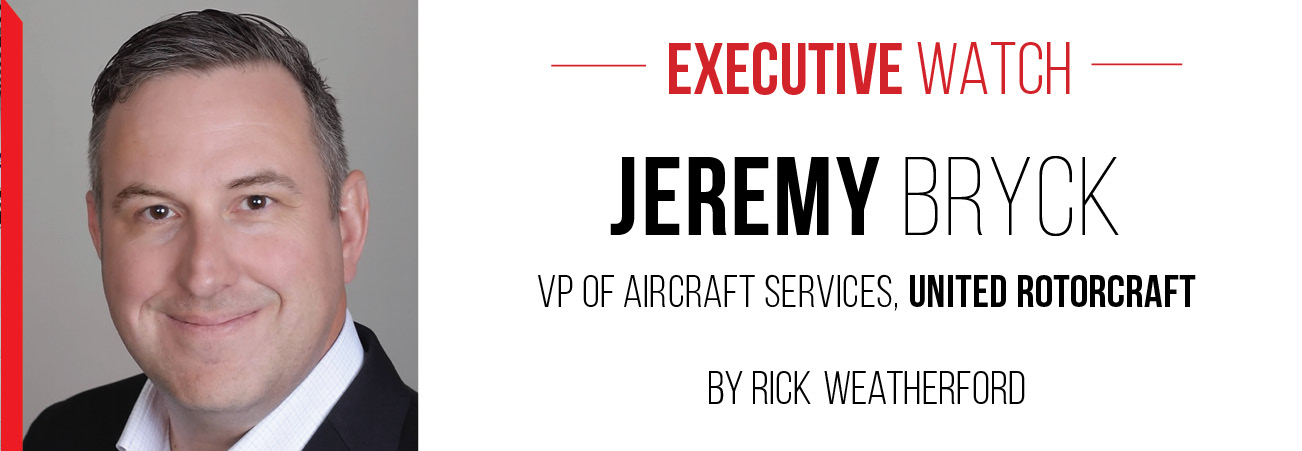
Jeremy Bryck’s humor gets us chuckling before our interview. When told we will be looking for him “to say something outstanding,” he has a deadpan reply. “Well, we have high expectations for today.” The Bowen Island, Canada, native is Canada Dry.
His humble humor saves me from envying—actually jealously hating—his first 22 years spent on that little island off of West Vancouver: He grew up in a picturesque village in a home heated by the warmth of a crackling fire from wood his family gathered each crisp autumn. “We were a hard-working family that enjoyed country life.” That country-boy life involved boating and kayaking amongst whales or either skiing and snowboarding on the mainland. “You could see Cypress Mountain from our house,” he says. “Yeah, did all that stuff; it was gorgeous.”
Still, let me not be too quick to judge. Bryck chose to leave this Pacific Coast paradise upon graduating from the British Columbia Institute of Technology (BCIT) with a two-year degree to begin his apprenticeship in aircraft maintenance engineering. He says, “I saw the writing on the wall and realized that if I wanted a career in aviation maintenance I’d have to relocate out of Vancouver.”
Career Takeoff
He was recruited to work on commercial jets in Edmonton, Alberta, at Spar Aerospace at the turn of the century. “The experience level in maintenance was high back then; you had to commit, whether it was fixed-wing or rotary. It was, like, holy cow, you're going to have to work hard to get your first job, you're going to have to stick to it and grind it out. That’s something we don't see today, when kids with a couple of years’ experience now want $120K and [other perks]. It’s much different now.”
Bryck committed to Spar and was ready to grind away— and then the 9/11 terrorist attacks happened in the U.S. Spar’s jet business lost altitude fast. “They laid everyone off,” he recalls. “I left fixed-wing and really never looked back: I went into rotorcraft and I discovered that helicopters are really cool.”
That shift took him to Eagle Copters in Calgary where he worked into 2003 as a maintenance overhaul engineer. From there his career took him through a variety of maintenance work in northern Alberta and in the Northwest Territories as he enhanced his experience and honed his skills with Airborne Energy Solutions. “We did a ton of neat, very niche stuff in oil and gas support,” he says.
Those hands-on, wrench-turning years, prepared Bryck to earn his AME and A&P licenses and to eventually be hired—at the young age of 30—as director of maintenance for seven years at HeliQwest International (in Denver, Colorado) and HeliQwest Aviation (in Villeneuve, Alberta). He recalls, “I worked long hours into the night and on weekends at HeliQwest, so I proved myself a bit of a workaholic.”
Manager
He also learned the ins and outs of being a manager, as opposed to being a hired hand. “It was absolutely baptism by fire,” Bryck says, “I knew from my experience what frustrates mechanics in the field, and I used my position in the manager’s chair to support our mechanics by supplying them with what they needed to work better. That’s my guiding light and main motivation. I work my butt off to make that happen, and hopefully my management translates into more productive, and ultimately happier, mechanics.”
Then in 2017, the workaholic moved to the East for the first time in his life, to Pennsylvania, to become director of Air Method’s Part 145 program, where he was promoted a year later to senior director of the program. “I had to change my mind-set at Air Methods. First, I cannot say enough good things about my time at HeliQwest, but they had a more flexible culture where I could work into the night. As a Part 145 large corporation, Air Methods curbed my tendency to work like that; they are more structured and process oriented. We had up to 140 employees just on my team alone in the Part 145 shop and that size requires standardization of process to manage.”
In 2021, Bryck moved over to Air Method’s wholly owned subsidiary, United Rotorcraft, in Mesa, Arizona (back in the West again), to be senior director of Part 145 operations. In May 2025, he was promoted to his current United Rotorcraft role: VP/general manager of aircraft services.
Experience + Education
Since Bryck first climbed into a manager chair at age 30 and rose from there, does he have a key that unlocks such success? He answers that he gained the needed technical experience as a licensed mechanic that allowed him “to walk the walk and talk the talk,” but in 2020 he also completed his bachelor’s degree at Arizona State University in engineering and industrial management—all while he and wife, Mila, raised their first child and moved twice, including to their current Denver home. He says, “That was quite a busy time; don’t ask my wife about it.” His college education, coupled with technical work experience, he says, “melded me into a better managerial mindset, but my guiding question has not changed: How do I make my employees’ work environment better? I now have more knowledge and tools to answer that. I have more data and know how to better use analytics to improve productivity. All that is necessary when running an organization as big as ours. The experience I gained over my career combined with our corporate resources here and my academic studies lets me feel I can take on a lot and be successful.”
The way Bryck takes on a lot has changed as he leads more people with each rising responsibility. “My leadership style is changing in real time since I moved up to vice president,” he says. “My style used to be more lead by example: I’d work hard and set an example for you to work hard. Now, I’m not on the floor as much, so I’m relying on the people who report to me that are on the floor. My role now is to determine and set reasonable goals and expectations. It’s an interesting morph for me.”
This “morph” comes with accountability, not only for those who report to Bryck, but he also holds himself accountable. “I have learned that we either learn from our mistakes or we will repeat them. Part of my persona is that I hold myself highly accountable; that’s both good and bad. When something goes wrong it weighs heavily on me. So, I make adjustments from that and try to move forward,” he says.
Attitude First
Someone who wants to move forward as a team member is exactly what Bryck looks for in others. He said, “I look for a combination of attitude, experience and skill, but first I want someone who wants to get something done here at United Rotorcraft. Attitude comes first, followed by experience. MRO is a team environment, especially with our volume of work. The fastest way to turn off team members is to come in with a bad attitude. You’ve got to want to work and be here.”
Experience Needed
Finding those with experience has become increasingly challenging over time. Bryck says, “Our biggest challenge is finding people with experience. A decade or so ago, there was more experience on the floor; a guy would know how to take care of an issue because he’d seen and done it 10 times before. Today, we have to have more policies and processes in place and we try to counter lack of experience with more education and training. A lot of MRO experience drained away during COVID and didn’t come back.” Yet, it’s not an insurmountable challenge, he says, “Helicopter MRO is a niche market because the airlines dominate the market. We can hire enough mechanics out of schools, but they don’t have the experience. Military resumes are highly valued by us because those mechanics gained experience on a particular system or engine in the service. We just have to get them more well-rounded [with experience in specific areas] to be a good fit.”
Those in the MRO sector are already too familiar with this shortage of technicians/mechanics. Yet, Bryck says he learned to optimistically spot opportunities from his boss and mentor, United Rotorcraft President Larry Alexander. Bryck sees opportunity for United Rotorcraft in the MRO shortage of workers. “Many shops are at max. capacity and there’s work out there for the taking, specifically in rotorcraft, for those who are properly staffed to handle that work.”
Bryck is working hard to make United Rotorcraft one of those staffed shops. He regularly rises early before 5:00 Mountain Time and talks, during his drive-in commute, to his shop in the Eastern time zone. (and also to United Rotorcraft’s operation in Saudi Arabia), starts his day in Denver walking the shop floor with his team, and then strategizes and meets throughout the workday before getting home in time to cook his family’s evening dinner as self-proclaimed and designated “family chef.” (On the day of our interview, there’s chicken thawing in the fridge, but he hasn’t yet decided how he will prepare it; he’s determined it will be served with a salad.)
Family & Fun
Friday dinner is often followed by family movie night, anticipated by all and especially enjoyed by children, Anika (age 9) and Aiden (4). That kicks off a family weekend of enjoying the Colorado Rockies with hiking, mountain biking (Bryck’s life-long sport), skiing, etc. depending on age and seasons. Bryck recommends Telluride as his favorite destination. “It’s the most amazing place, but I cannot make it there every weekend. I like out-of-the-way, backcountry places; highway traffic is the bane of my existence.”
Love & Pride
Yet, when the weekend is over, Bryck returns to his beloved rotorcraft, the true love of his maintenance-career. He left cold, impersonal jet maintenance when this century began, found his heli passion, and speaks of helicopter maintenance in almost personal terms. “In the field, you are usually assigned to one helicopter; that aircraft becomes your responsibility and you get attached to it. You’re not just a member of a big crew checking in and out of an airport. It’s you and your aircraft. You inspect it, repair it, and even wash it; you get to know it. That’s what first attracted me to being a helicopter mechanic at Eagle Copters. In helicopter maintenance, there is still a love for the machine. In rotorcraft, there’s a lot of ownership and pride, and I think that will always remain in the helicopter industry.”
READ NOV/DEC ISSUE OF ROTOR PRO
READ MORE ROTOR PRO: https://justhelicopters.com/Magazine
WATCH ROTOR PRO YOUTUBE CHANNEL: https://buff.ly/3Md0T3y
You can also find us on
Instagram - https://www.instagram.com/rotorpro1
Facebook - https://www.facebook.com/rotorpro1
Twitter - https://twitter.com/justhelicopters
LinkedIn - https://www.linkedin.com/company/rotorpro1