|
Dec
15
2025
|
|
Posted 305 days ago ago by Admin
|
|
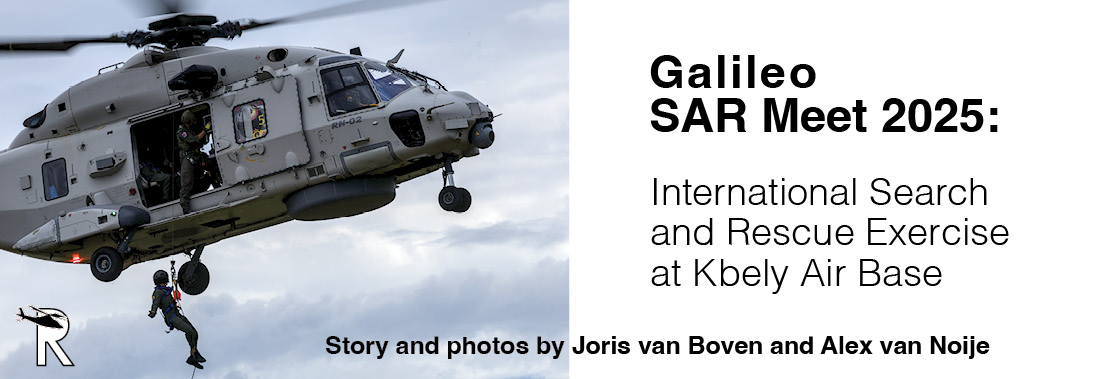
The Czech Republic's 243rd Helicopter Squadron successfully hosted the Galileo Search and Rescue (SAR) meet 2025 this past August at Prague-Kbely airbase (ICAO: LKKB), with the motto: "That Others May Live." This international event represented the continuation of the European Search and Rescue meeting following a two-year operational hiatus. The exercise was designed to enhance interoperability between European helicopter units while using the European Global Navigation Satellite System Galileo capabilities for improved operational effectiveness.
The five-day exercise was conducted at Kbely airbase, one of the Czech Republic's primary SAR operational centers. The exercise involved multiple European nations' helicopter crews, technical personnel, and rescue specialists in training scenarios designed to enhance operational effectiveness and crew resource management in real-world SAR situations. The event successfully demonstrated the continued commitment to multinational cooperation in emergency response capabilities while showcasing advanced precision flying techniques and Galileo technology integration.
Operational Background
The Galileo SARMEET was established to address the growing complexity of SAR operations in modern environments and the need for standardized procedures across NATO and European Union member states. The primary aim was to facilitate learning opportunities where participating units could share tactics, techniques, and procedures (TTPs) and experiences across the SAR community to make SAR operations safer, faster, and more efficient.
The 2025 edition marked a significant milestone as it was the first major international SAR exercise hosted by the Czech airforce. This operational gap was attributed to various factors including competing operational commitments, resource allocation constraints across participating nations, and the global impact of pandemic-related restrictions on international military exercises.
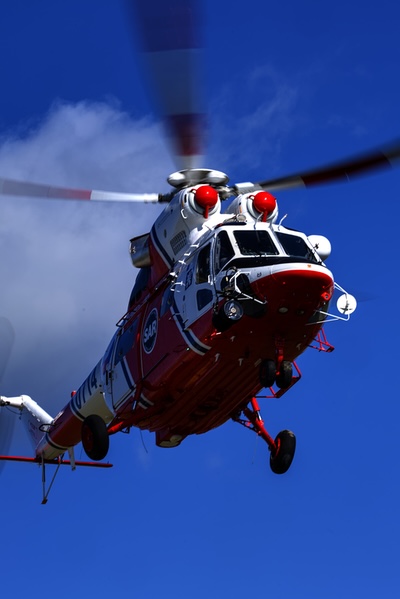
The selection of Kbely airbase as the host facility was strategically significant for multiple reasons. Prague–Kbely Airport (ICAO: LKKB) is a military airport located in Kbely, in the northeast municipal district of Prague, Czech Republic. Once Prague's principal civilian airport, it was now used mainly as a military base for the Czech Air Force. The facility's historical significance, established infrastructure, and current operational capacity made it an ideal venue for hosting complex international helicopter operations requiring sustained logistical support.
Host Nation Capabilities
The 243rd Squadron, serving as the primary host unit, operated from one of the Czech Republic's two designated SAR bases. The Air Transportation Base located at Prague-Kbely was utilized for air transport of personnel and material within the Czech Republic and abroad. In addition to military related transport activities, it had been used as a base for transporting Czech constitutional representatives since 1993. The facility also carried out air movements of human transplants and contributed to the Czech Integrated Rescue System, providing operational contexts for exercise scenarios. The base's strategic proximity to Prague allowed for easy access to urban SAR training scenarios while maintaining appropriate operational security measures throughout the exercise period.
The Czech Air Force's SAR capabilities were augmented by the base's dual-role functionality in VIP transport and medical emergency operations. Kbely airfield was no longer used as a front-line Czech Air Force base, but it was actively utilised by military transport aircraft of the Czech Air Force, and the VIP aircraft fleet used to transport Czech politicians and government officials.
Exercise Structure and Operational Framework
SARMEET 2025 was structured around two primary operational components designed to test different aspects of SAR capabilities across participating units. The two main parts of the event were the competitive SAR contest and the educational symposium. This dual approach ensured evaluation of both practical operational skills and theoretical knowledge sharing, creating a balanced learning environment for all participants.
Competitive SAR Contest Operations
The SAR contest provided participating units with opportunities to demonstrate their skills, assets, and crew cohesion under standardized evaluation criteria. The main pillar of the contest was the flying challenge, which systematically tested piloting skills, precision of hoist operations, crew resource management capabilities, cooperation protocols, and the ability to improvise effectively while completing various tasks during navigation competitions. The flying challenges were designed to simulate real-world SAR scenarios commonly encountered in European operational environments.
A particularly demanding and innovative component involved a specialized precision obstacle course that tested the absolute limits of helicopter crew coordination and flying precision.
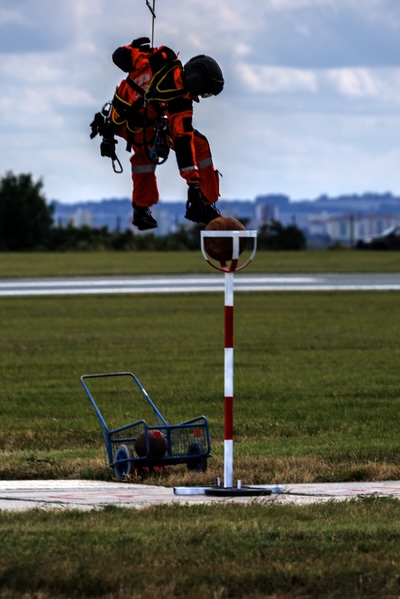
In this challenging obstacle course exercise, participating helicopter crews were required to demonstrate exceptional precision flying skills through a multi-stage process. Initially, rescue divers equipped with standard SAR gear were lowered to the ground via hoist cable, requiring precise positioning and crew coordination. Subsequently, crews had to manuver designated objects through a complex obstacle course using only the hoist cable and helicopter positioning controls. Followed by the diver to be hoisted some meters above the ground to drop a ball into a basket. The last part of the obstacle course was the use of a special hook at the end of the line to grab a red and white ring.
The obstacle course exercise required good crew resource management capabilities, demanding good communication and coordination between pilot, copilot, and rescue specialists to successfully navigate the course within specified time parameters. The exercise challenged crews to maintain precise aircraft positioning while simultaneously managing complex hoist operations, simulating real-world scenarios where SAR crews must navigate around obstacles during actual rescue operations in urban environments, confined industrial spaces, or challenging terrain features. While the helicopter crews were running the obstacle course, the judges on the ground evaluated every step and kept score.
Participating Nations and Operational Assets
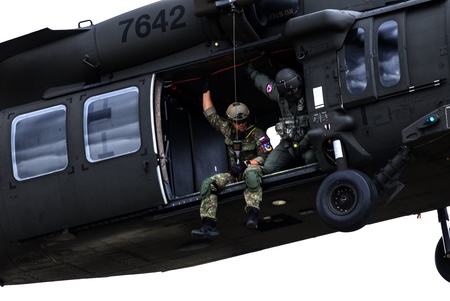
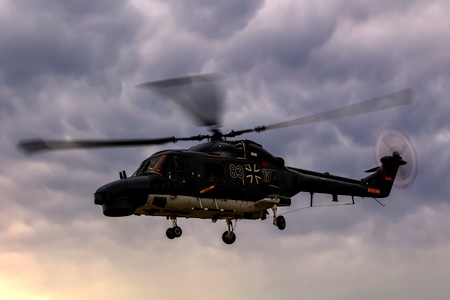
SARMEET 2025 featured an impressive and diverse array of European helicopter crews and aircraft platforms, representing eight nations and demonstrating the broad scope of European SAR cooperation. The confirmed participating crews and aircraft included Belgian NH-90 helicopters, German SeaLynx maritime helicopters and EC-135 from Transporthubschrauberregiment 30, Spanish NH-90 multi-role platforms, Lithuanian AS365N3+ Dauphin variants, Slovakian UH-60M Black Hawk helicopters, Norwegian AW-101 Merlin aircraft, and Czech Mi-17, Mi-171, and W-3A helicopters. Additionally, Austrian forces participated with a C-182 fixed-wing aircraft, adding an important fixed-wing coordination dimension to the exercise.
The remarkable diversity of aircraft platforms effectively demonstrated the varied operational approaches and capabilities across European SAR units. The Belgian and Spanish NH-90 helicopters represented the latest generation of NATO helicopter technology, equipped with advanced avionics systems, sophisticated navigation equipment, and multi-role capabilities suitable for complex SAR operations across various operational environments.
The German Navy brought a specialized SeaLynx maritime helicopter, showcasing the specialized maritime SAR capabilities. The German Army also deployed an EC-135 helicopter from Transporthubschrauberregiment 30 based at Heeresflugplatz Niederstetten. This combination demonstrated the importance of platform specialization in addressing different aspects of SAR operations, from maritime rescue to critical care medical transport.
Lithuanian forces operated the proven AS365N3+ Dauphin variant, a reliable platform with operational history in European SAR operations. The Slovak deployment of the American-manufactured UH-60M Black Hawk helicopters demonstrated effective NATO interoperability standards and the successful integration of different technological approaches within European SAR operations.
The Norwegian AW-101 Merlin “SAR Queen” represented one of Europe's most capable and advanced SAR platforms, equipped with sophisticated radar systems, extensive range capabilities, and advanced mission systems suitable for long-range operational requirements. This platform's participation provided valuable insights into advanced SAR technologies and operational procedures.
The host nation Czech Republic contributed multiple aircraft types, including the robust and reliable Mi-17 and Mi-171 Soviet-designed helicopters alongside the Polish-manufactured W-3A Sokół. This variety of Eastern European platforms provided valuable diversity in operational techniques and maintenance procedures, contributing to the knowledge sharing objectives of the exercise.
The Austrian C-182 (Cessna Skylane) fixed-wing participation added an essential dimension to the exercise, representing critical airborne coordination and command capabilities essential to large-scale SAR operations.
Galileo Integration and Advanced Technology Enhancement
The integration of Galileo positioning technology represented a significant advancement in European SAR capabilities and strategic technological autonomy. The European Global Navigation Satellite System (GNSS) provides enhanced precision, reliability, and security compared to other global positioning systems, particularly in the challenging environments typically encountered in SAR operations.
The exercise provided valuable opportunities to evaluate the practical interoperability of Galileo systems with existing aircraft navigation equipment across different European helicopter platforms and manufacturers. This crucial assessment was essential for ensuring standardized operational procedures across multinational operations while maintaining necessary compatibility with legacy navigation systems still in operational service with some participating nations.
Real rescue
A Norwegian fisherman, Jon-Atle Bjørnø, was in distress in the Barentz Sea last February, when his ship sank during bad weather. He activated his Galileo emergency beacon and he and his colleague were rescued soon thereafter because there was a Norwegian AW101 SAR helicopter nearby.
After activating his Galileo beacon, he could only wait in the freezing water and suddenly he heard what felt like “the choir of angels,” which were the powerful engines of the helicopter approaching. “I suddenly relaxed, even if that sounds weird”, said Jon-Atle – “I realized it might end well after all”.
The rescue was performed by a Norwegian AW101 Merlin helicopter (known as "SAR Queen") from the 330th squadron based at Bank Airbase (ICAO: ENNA). The response time from the moment the beacon was activated was approximately 20 minutes. The quick response was a result of the helicopter being on an exercise approximately 10 minutes away, a fortunate circumstance as a typical response from that airbase would require more than one hour.
READ SEP/OCT ISSUE OF ROTOR PRO
READ MORE ROTOR PRO: https://justhelicopters.com/Magazine
WATCH ROTOR PRO YOUTUBE CHANNEL: https://buff.ly/3Md0T3y
You can also find us on
Instagram - https://www.instagram.com/rotorpro1
Facebook - https://www.facebook.com/rotorpro1
Twitter - https://twitter.com/justhelicopters
LinkedIn - https://www.linkedin.com/company/rotorpro1