NTSB Final Report: Andale, KS
|
Location:
|
Andale, Kansas
|
Accident Number:
|
CEN24FA248
|
|
Date & Time:
|
July 5, 2024, 08:01 Local
|
Registration:
|
N51017
|
|
Aircraft:
|
Rotorway Scorpion 133
|
Aircraft Damage:
|
Destroyed
|
|
Defining Event:
|
Mast bumping
|
Injuries:
|
1 Fatal
|
|
Flight Conducted Under:
|
Part 91: General aviation - Personal
|
|
|
Analysis
The pilot departed from his residence on a local area flight to practice maneuvers in the experimental helicopter. A witness heard a loud “bang” and observed debris separating from the helicopter as it descended to the ground. Surveillance camera audio captured the sound of the helicopter’s experimental engine at a constant high-power setting, followed by a momentary reduction in power. Shortly thereafter, the audio captured multiple impacts and the helicopter came into view inverted, then descended to the ground. A postimpact fire consumed the wreckage.
Postaccident examination of the wreckage found that the aft tailboom had separated from the helicopter and was located about 150 yards from the main wreckage. An impact mark consistent with the shape of a main rotor blade was noted at the right side of the tubular structure at the separation area, consistent with a main rotor blade impact.
While no mechanical anomalies were found during the airframe and engine examination, the examination was limited due to extensive fire damage.
The throttle control cable was found thermally separated from the collective control and the snap-out ball joint was not in the safety position; it was found separated from the carburetor. However, the surveillance audio of the engine’s reduction and increase of rpm before the main rotor’s impact with the tailboom are consistent with an intact throttle control and indicate that the throttle cable likely separated from the carburetor during the impact with terrain.
The pilot did not hold a helicopter rating. His last solo endorsement was October 07, 2022, and was valid until January 05, 2023. The accident occurred 18 months after the expiration of the last solo endorsement, and the pilot was not authorized to conduct solo flight operations at the time of the accident.
The pilot previously reported that he felt uncomfortable performing autorotations and requested additional training from a flight instructor; however, it was unknown what maneuvers he was performing during the accident flight.
Teetering main rotor systems, such as the one on the accident helicopter, are particularly susceptible to main rotor mast bumping during the low-G conditions that result from abrupt forward (nose-down) cyclic inputs. Based on the available evidence the pilot likely applied abrupt control inputs while performing an unknown maneuver, which resulted in main rotor mast bumping during a low-G condition and subsequent main rotor blade contact with and subsequent separation of the tailboom..
Probable Cause and Findings
The National Transportation Safety Board determines the probable cause(s) of this accident to be:
The pilot’s abrupt control inputs, which resulted in a low-G condition, main rotor mast bumping, and subsequent severing of the tailboom by the main rotor blades.
Findings
Factual Information
History of Flight
On July 05, 2024, about 0801 central daylight time, a Rotorway Scorpion 133 helicopter, N51017, was destroyed when it was involved in an accident near Andale, Kansas. The pilot was fatally injured. The helicopter was operated as a Title 14 Code of Federal Regulations Part 91 personal flight.
According to the pilot’s family, the local area flight originated from his personal residence, and he was conducting flight maneuvers, including autorotations, in preparation for a check ride for a rotorcraft (helicopter) rating.
A review of a surveillance video from a residence near the accident site initially showed the helicopter not in view, but included an audible sound of the helicopter’s engine consistent with a high-power setting. About 17 seconds into the video, the sound of the engine reduced momentarily then increased to a lower setting as previously heard. Shortly after, numerous impacts are heard followed by the helicopter descending to the ground inverted. A postimpact fire ensued and consumed the wreckage.
A witness who was traveling in a motor vehicle nearby heard a loud “bang” and observed debris separating from the helicopter as it descended to the ground.
The wreckage was located in a wooded area that bordered a cultivated field about 1.6 miles northeast of the pilot’s residence and point of departure.
A postaccident search did not reveal any ADS-B or radar data for the accident flight.
Pilot Information
|
Certificate:
|
Private Age: 70,Male
|
|
Airplane Rating(s):
|
Single-engine land Seat Occupied: Left
|
|
Other Aircraft Rating(s):
|
None Restraint Used: Lap only
|
|
Instrument Rating(s):
|
None Second Pilot Present: No
|
|
Instructor Rating(s):
|
None Toxicology Performed: Yes
|
|
Medical Certification:
|
Class 3 With waivers/limitations Last FAA Medical Exam: December 19, 2022
|
|
Occupational Pilot:
|
No Last Flight Review or Equivalent: October 7, 2022
|
|
Flight Time:
|
(Estimated) 128 hours (Total, all aircraft), 61.4 hours (Total, this make and model)
|
The FAA issued the pilot a third-class medical certificate on December 19, 2022, with the following limitation: “Not valid for night flying or by color signal control.” At the time of the exam the pilot reported a total of 128 hours of flight experience.
A review of the pilot’s logbook revealed he had accrued a total of 32.6 hours of dual instruction, 28.8 hours of solo flying, and a total of 61.4 hours in the accident helicopter. The last entry was dated May 17, 2024.
The pilot completed a pre-solo written examination for the Rotorway Scorpion helicopter on October 22, 2020. He received pre-solo flight training on October 7, 2022, and a solo endorsement was issued on October 7, 2022. There were no other solo endorsements noted. The solo endorsement was valid for 90 days, until January 5, 2023. The accident occurred 18 months after the expiration of the last solo endorsement.
The pilot held a repairman experimental aircraft builder certificate for the accident helicopter.
According to the flight instructor who issued the pilot’s last solo endorsement, the pilot contacted him to schedule additional flight training and indicated that he was not comfortable performing autorotations.
Aircraft and Owner/Operator Information
|
Aircraft Make:
|
Rotorway
|
Registration:
|
N51017
|
|
Model/Series:
|
Scorpion 133
|
Aircraft Category:
|
Helicopter
|
|
Year of Manufacture:
|
1988
|
Amateur Built:
|
Yes
|
|
Airworthiness Certificate:
|
Experimental (Special)
|
Serial Number:
|
F883417
|
|
Landing Gear Type:
|
None; Skid
|
Seats:
|
2
|
|
Date/Type of Last Inspection:
|
Unknown
|
Certified Max Gross Wt.:
|
1250 lbs
|
|
Time Since Last Inspection:
|
|
Engines:
|
1 Reciprocating
|
|
Airframe Total Time:
|
|
Engine Manufacturer:
|
Rotorway
|
|
ELT:
|
Not installed
|
Engine Model/Series:
|
RW152
|
|
Registered Owner:
|
On file
|
Rated Power:
|
152 Horsepower
|
|
Operator:
|
On file
|
Operating Certificate(s) Held:
|
None
|
The helicopter was built by the pilot from a kit, and its airworthiness certificate was issued on April 26, 1988. There was no maintenance logbook observed during the investigation; however, a notepad was provided that showed dates with brief descriptions of maintenance performed. There were no hours recorded, and there was no record of the last condition inspection.
A current helicopter weight and balance sheet was not available for review.
The helicopter was not equipped with a crash-resistant fuel system, nor was it required to be.
Meteorological Information and Flight Plan
|
Conditions at Accident Site:
|
Visual (VMC)
|
Condition of Light:
|
Day
|
|
Observation Facility, Elevation:
|
ICT,1340 ft msl
|
Distance from Accident Site:
|
13 Nautical Miles
|
|
Observation Time:
|
07:53 Local
|
Direction from Accident Site:
|
130°
|
|
Lowest Cloud Condition:
|
Few / 12000 ft AGL
|
Visibility
|
10 miles
|
|
Lowest Ceiling:
|
Broken / 16000 ft AGL
|
Visibility (RVR):
|
|
|
Wind Speed/Gusts:
|
4 knots / None
|
Turbulence Type Forecast/Actual:
|
/
|
|
Wind Direction:
|
300°
|
Turbulence Severity Forecast/Actual:
|
/
|
|
Altimeter Setting:
|
30.07 inches Hg
|
Temperature/Dew Point:
|
21°C / 17°C
|
|
Precipitation and Obscuration:
|
No Obscuration; No Precipitation
|
|
|
Departure Point:
|
Andale, KS (pvt)
|
Type of Flight Plan Filed:
|
None
|
|
Destination:
|
Andale, KS (pvt)
|
Type of Clearance:
|
None
|
|
Departure Time:
|
Type of Airspace:
|
Class G
|
Wreckage and Impact Information
|
Crew Injuries:
|
1 Fatal
|
Aircraft Damage:
|
Destroyed
|
|
Passenger Injuries:
|
N/A
|
Aircraft Fire:
|
On-ground
|
|
Ground Injuries:
|
N/A
|
Aircraft Explosion:
|
Unknown
|
|
Total Injuries:
|
1 Fatal
|
Latitude, Longitude:
|
37.78511,-97.638388(est)
|
The helicopter came to rest on its left side in a swale; a postcrash fire consumed the majority of the composite structure. The tail rotor assembly and a section of the tailboom’s tubular steel structure were located about 150 yards southwest of the main wreckage.
Examination of the wreckage revealed the separated areas of the tailboom were displaced left and the separation points exhibited semicircular impressions. Leading-edge abrasions and witness marks consistent with impact with the tailboom structure were noted to the outboard areas of the main rotor blades.
Main rotor drive continuity was confirmed from the rotor head to the lower drive pulley. The freewheeling unit functioned normally during field testing. Both main rotor blades remained attached and exhibited downward droop. An impact mark was observed on the main rotor mast beneath blade W. Blade S displayed thermal discoloration, and a mid-chord skin separation was present about 2 ft inboard of the tip.
Blade W exhibited aft bending about 3 ft from the tip, and a mid-chord upper-skin separation was noted about 4 inches from the tip. Leading-edge gouging was present along the outboard
section of the blade. A leading-edge impression consistent with contact from a steel ballast weight was identified on the blade. The ballast weight showed deformation and material transfer consistent with impact from a main rotor blade. Leading-edge abrasions consistent with contact from the tail rotor control cable were noted approximately 8 inches from the blade tip.
The tail rotor drive belts were fractured and separated from their respective pulleys. Deformation was observed on the tail rotor drive pulley and its supporting structure. Both tail rotor blades and pitch change links remained attached to their mounts. One blade exhibited deformation at the tip. The other blade displayed a semicircular impression on the leading edge near mid-span, with black transfer marks consistent with the paint from the tailboom’s tubular structure. White transfer marks were present on the tail rotor drive belt pulley.
The airframe fuel system was destroyed.
The recovered ballast weights consisted of a steel plate, dumbbell, and barbell plate that totaled about 65 lbs. The ballast weights were not secured in the helicopter and their location in the helicopter at the time of the accident was unknown.
The horizontal stabilizers and their supporting tubular support structure were separated from the helicopter. The right horizontal stabilizer was fractured into two sections and exhibited leading-edge damage.
Due to the fire damage, only partial flight control continuity was established; airframe-to-engine control continuity could not be established.
The experimental engine remained attached to the airframe and exhibited impact and thermal damage. No anomalies were noted to the spark plug electrodes. Oil was present within the engine, and the valvetrain showed no anomalies. The majority of the fuel system components were thermally destroyed. The carburetor remained attached to the engine and was noted in the idle position. The throttle control cable was thermally separated from the collective control and the snap-out ball joint was not in the safety position; it was found separated from the carburetor. The limited examination of the engine revealed no mechanical anomalies.
Due to the fire damage, fuel samples were not available from the airframe or the engine.
Medical and Pathological Information
The Sedgwick County Forensic Science Center performed the pilot’s autopsy. According to the pilot’s autopsy report, his cause of death was a result of multiple blunt force and thermal injuries, and the manner of death was accident.
Postmortem toxicology testing by the FAA Forensic Science Laboratory detected tamsulosin and ibuprofen in the blood and urine.
Tamsulosin (Flowmax) is an alpha blocker used to treat benign prostate hyperplasia and is acceptable for pilots. Ibuprofen (Motrin) is a non-prescription NSAID used to treat pain, fever, and inflammation. Ibuprofen is acceptable for pilots if the underlying condition is acceptable.
Additional Information
The FAA’s Helicopter Flying Handbook (FAA-H-8083-21B) describes low-G conditions and mast bumping, stating, in part, the following:
Helicopters with two-bladed teetering rotors rely entirely on the tilt of the thrust vector for control. Therefore, low-G conditions can be catastrophic for two-bladed helicopters…
Abrupt forward cyclic input or pushover in a two-bladed helicopter can be dangerous and must be avoided, particularly at higher speeds. During a pushover from moderate or high airspeed, as the helicopter noses over, it enters a low-G condition. Thrust is reduced, and the pilot has lost control of fuselage attitude but may not immediately realize it. Tail rotor thrust or other aerodynamic factors will often induce a roll. The pilot still has control of the rotor disk, and may instinctively try to correct the roll, but the fuselage does not respond due to the lack of thrust. If the fuselage is rolling right, and the pilot puts in left cyclic to correct, the combination of fuselage angle to the right and rotor disk angle to the left becomes quite large and may exceed the clearances built into the rotor hub. This results in the hub contacting the rotor mast, which is known as mast bumping…and the energy and inertia in the rotor system can sever the mast or allow rotor blades to strike the tail or other portions of the helicopter.
The handbook includes an illustration that depicts the main rotor hub contacting the main rotor mast, as a result of improper corrective action in a low-G condition (see figure).
Figure. Mast bumping
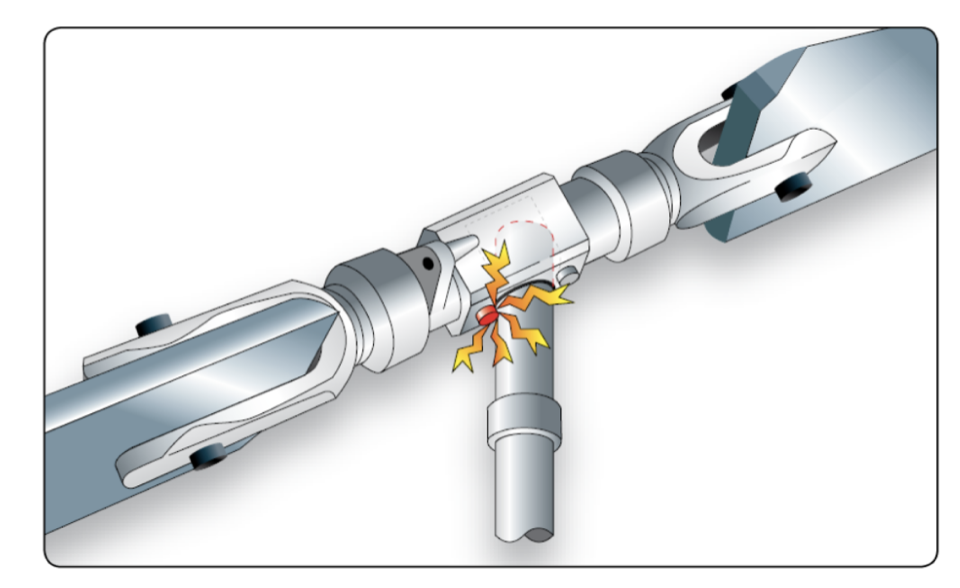
illustration. (Source: FAA)
Administrative Information
|
Investigator In Charge (IIC):
|
Galbraith, Damian
|
|
Additional Participating Persons:
|
David Gobble; FAA Wichita FSDO; Wichita, KS
|
|
Original Publish Date:
|
July 29, 2026
|
|
Last Revision Date:
|
|
Investigation Class:
|
Class 3
|
|
Note:
|
|
Investigation Docket:
|
https://data.ntsb.gov/Docket?ProjectID=194615
|
READ MORE ROTOR PRO: https://justhelicopters.com/Magazine
WATCH ROTOR PRO YOUTUBE CHANNEL: https://buff.ly/3Md0T3y
You can also find us on
Instagram - https://www.instagram.com/rotorpro1
Facebook - https://www.facebook.com/rotorpro1
Twitter - https://twitter.com/justhelicopters
LinkedIn - https://www.linkedin.com/company/rotorpro